
Class B ELDT in Mississippi – Public Works, Delivery & Utility Vehicle Paths
Class B CDL work in Mississippi is built around “keep-the-state-moving” vehicles: single-unit trucks that support cities and counties, local businesses, and essential services. A typical Class B day might mean running a dump truck on a road crew, hauling materials for a ready-mix operation, driving a box truck on a delivery route, or operating a utility service vehicle that supports line work, telecom installs, or storm response. For drivers who choose passenger-facing careers, Class B can also connect to transit and school bus roles when the right endorsements are added and behind-the-wheel training is completed.
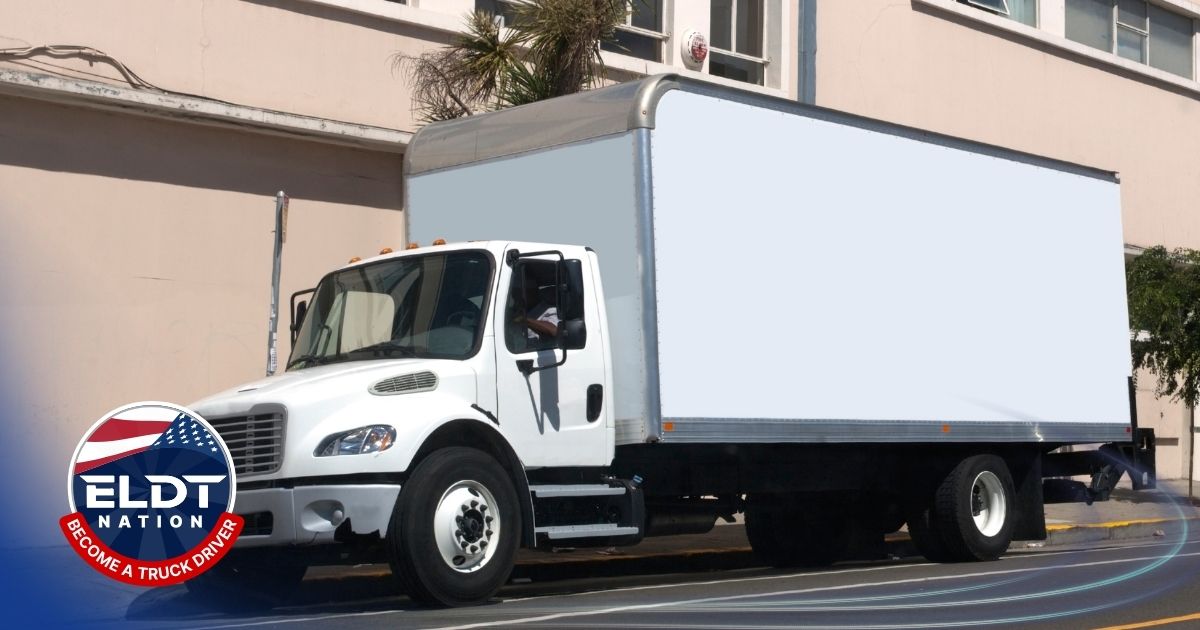
Mississippi Class B careers and vehicle paths
Before you commit to a training plan, it helps to understand what “Class B” usually looks like on the job market. In simple terms, Class B is built for single-unit commercial vehicles that are heavy enough to require a CDL, but not configured as a tractor-trailer combination like Class A. In Mississippi, that translates into stable demand across public sector roles, local delivery networks, construction support, and utility service work.
Can I do ELDT online in Mississippi?
Yes, you can complete the theory portion of ELDT online while living in Mississippi, as long as your program is delivered by a registered training provider and you complete the required assessments successfully. The key is understanding what “online ELDT” includes and what it does not include, so your plan stays realistic and compliant from day one.
What “online ELDT” actually means
ELDT is not a single task. It is a training requirement with two distinct parts:
- Theory training
- Behind-the-wheel training (often shortened to BTW)
Theory training covers the knowledge foundation: safety concepts, driving regulations, vehicle systems, inspection logic, hazard awareness, and the decision-making habits that reduce risk. This is the part that can be completed online when the provider’s course meets the ELDT curriculum requirements and verifies your completion through the proper reporting process.
Behind-the-wheel training is different. It is hands-on instruction and performance practice in real vehicles, covering skills such as:
- Pre-trip inspection as a practical routine, not just memorized facts
- Control systems and safe operating procedures
- Basic maneuvers and backing patterns
- Road driving under supervision
- Real-world judgment: space management, hazard response, and safe scanning habits
Online ELDT does not replace behind-the-wheel training. Instead, it clears the theory requirement so you can move forward efficiently into the practical portion without delays.
Why online theory helps Mississippi applicants
Mississippi is a state where logistics and distance matter. Even when you live near a metro area, classroom schedules can clash with work and family responsibilities. If you’re outside a larger hub, commuting for classroom theory can become a barrier that slows the entire process.
Online theory is often the most practical choice in Mississippi because it helps you:
- Study from anywhere, without turning every lesson into a travel day
- Build consistent momentum with shorter study blocks (before work, after dinner, weekends)
- Avoid waiting for the “next class start date” when you are ready to move now
- Maintain progress even when your schedule changes week to week
For many Mississippi applicants, the best advantage is control. When you control the theory timeline, you can coordinate the rest of the process-permit testing, medical card timing, and behind-the-wheel training-around real life rather than around someone else’s calendar.
What happens after you finish online theory
Once you complete ELDT theory with ELDT Nation and pass the required assessments, your completion is submitted to the FMCSA Training Provider Registry. That submission is what connects your training to the compliance system used nationwide.
From a practical standpoint, this is what it means for your next steps:
- Your ELDT theory requirement is recorded through the proper channel.
- You can move forward to behind-the-wheel training with a CDL school or training partner.
- You are positioned to continue toward skills testing, as long as you have also completed the Mississippi steps that come before the skills test (such as holding the permit and meeting any administrative requirements).
The most important planning mindset here is simple: treat ELDT theory completion as the moment you remove a major bottleneck. It does not finish the journey by itself, but it makes the rest of the journey possible to execute cleanly and quickly-especially if you already have your documents, medical card timing, and permit plan lined up.
.jpg)
ELDT: federal rules vs Mississippi specifics
Understanding what is “federal” versus what is “Mississippi” is the fastest way to avoid wasted time. ELDT is a federal training rule, but your CDL is still issued through Mississippi’s licensing system. That means two things are true at the same time:
You must meet the federal ELDT standard so you are eligible to move forward, and you must also follow Mississippi’s permit, scheduling, documentation, and medical compliance flow so your progress is recognized at each checkpoint.
The federal baseline
ELDT is a federal requirement that applies when you are entering the CDL system for the first time or when you are adding certain first-time endorsements. For a Mississippi applicant, the practical takeaway is simple: if you have never held a Class B CDL before and you are pursuing Class B now, you should plan on ELDT being part of your path.
ELDT does not replace your state tests. It does not replace your permit exams, and it does not replace the skills test. Instead, it is a prerequisite training standard that must be satisfied before you can move into the final testing phase for the applicable license or endorsement. If you treat ELDT like “optional prep,” you risk hitting a wall later when you try to schedule or take a required exam and discover you are not eligible.
Two parts, one requirement
ELDT is divided into two components that work together:
- Theory training: the knowledge foundation, delivered through an approved provider, including required curriculum topics and an assessment standard.
- Behind-the-wheel training: hands-on practical training in real vehicles, covering inspection routines, control skills, maneuvers, and road-driving performance.
A common misunderstanding is assuming that “online ELDT” means the entire requirement is online. In reality, the theory portion can be completed online, but the behind-the-wheel portion must be completed hands-on with equipment and supervision.
No minimum hours, but a complete curriculum
A second misunderstanding is assuming theory time is measured in hours. The federal standard is not “sit for X hours.” The standard is “cover all required topics and demonstrate competency through assessment.” That is why a self-paced course can still be compliant: it is built around full topic coverage and verified testing, not around a classroom attendance clock.
Assessment threshold matters
ELDT theory is not complete until the learner passes the required theory assessments at or above the required score threshold. Plan your study like you would plan for a job requirement: the goal is not simply finishing modules, but finishing them with enough understanding that you pass assessments cleanly and do not have to repeat steps later.
Mississippi-specific rules, agencies, and checkpoints
Mississippi administers CDL processes through its state licensing structure. This is where your real-world progress either stays smooth or becomes frustrating. Most delays in Mississippi are not caused by the theory itself, but by missed administrative details: missing documents, medical certification timing, or test scheduling misunderstandings.
The agency you will interact with most often for CDL-related services is the Mississippi Department of Public Safety’s Driver Service Bureau. When you plan your timeline, assume that your main interaction points will revolve around:
- Permit testing and credential transactions
- Medical certification compliance and record posting
- CDL skills test scheduling and completion
- Office visits where original documents and proofs must match requirements
Non-retroactive rule and the ELDT compliance date
Mississippi recognizes the federal ELDT start date and the “not retroactive” nature of the rule. This matters because it determines who is exempt. If someone already held the relevant CDL or endorsement before the compliance date, they generally are not required to complete ELDT for that same credential. For new applicants, though, the rule is very much active, and the safest planning assumption is that first-time Class B applicants should treat ELDT as mandatory.
A useful way to think about Mississippi checkpoints
Even though the process can feel like a long list, it is easier to manage if you group it into checkpoints you can “clear” one by one:
- Eligibility checkpoint: documents and identity/residency proofs are ready and consistent.
- Medical checkpoint: medical certification is valid and properly reflected in the system.
- Permit checkpoint: you have passed the Commercial Learner’s Permit knowledge tests required for your plan.
- ELDT checkpoint: theory completion is recorded through the correct reporting channel.
- Training checkpoint: behind-the-wheel training is complete with the right vehicle type for your intended license.
- Testing checkpoint: your skills test is scheduled and completed, and you have everything needed on test day.
When you align your plan to these checkpoints, you reduce the chance of doing steps out of order.
Mississippi scheduling reality
In Mississippi, the CDL skills test is not something you casually book online at the last minute. Scheduling is handled by phone, and Mississippi provides a statewide help desk contact structure for CDL assistance. This has two important consequences:
- You need to plan ahead for availability and logistics, especially if you have limited flexibility with work hours.
- You need to treat scheduling like a formal administrative step, not like a simple appointment you can “just move around” without consequences.
What you should be ready to confirm when scheduling
When you call to schedule, you should expect to confirm details that affect whether you can actually test:
- What class of license you are testing for (Class B)
- Whether your vehicle configuration matches the Class B test requirements
- What documents you must bring
- Whether there are specific location rules you must follow
- What happens if weather disrupts testing at the site
A short “don’t get tripped up” note
In some cases, you may be able to start the scheduling conversation before every other step is fully completed. However, do not treat “scheduled” as “guaranteed.” If ELDT is required for your path, your ELDT completion must be properly recorded before you actually take the skills test. If it is not, you risk showing up for a test you are not eligible to take, or having the appointment canceled. The safe approach is to schedule with a realistic timeline and confirm that your required prerequisites will be satisfied well before the test date.
Step-by-step: getting your Class B CDL in Mississippi
This section is built to prevent the two most common failures in CDL planning: doing the right steps in the wrong order, and doing steps correctly but too tightly on timing. Mississippi applicants who move fastest are usually not the ones who rush. They are the ones who sequence tasks properly and leave enough buffer to avoid system delays.
Step 1 - Confirm you’re pursuing the right license class
Start by confirming that Class B matches the vehicle you intend to drive. Mississippi defines Class B around a single vehicle weight threshold. In practical terms, think of Class B as the license path for heavy single-unit trucks such as many straight trucks, dump trucks, and large buses.
Class B is typically the correct path when:
- Your primary vehicle is a single-unit commercial vehicle at or above the Class B threshold
- You are not planning to operate a tractor-trailer combination as your main vehicle
- You want access to public works fleets, local delivery fleets, or service fleets that use heavy single-unit vehicles
Common add-ons you should decide early
Your “Class B plan” can change depending on what you will drive. Decide early because it affects what you must study and how you should train.
- Air brakes: common on many Class B vehicles. If your target vehicle uses air brakes, plan to qualify properly and avoid restrictions.
- Passenger (P) and School Bus (S): required for transit and school bus operations. These add written testing and behind-the-wheel requirements that must be planned from the start.
- Hazmat (H): separate from the typical Class B vehicle path, involves extra steps and is not something you “tack on later” without planning. If hazmat is your goal, you should treat it as its own project.
Step 2 - Build your document and compliance checklist
Mississippi requires a specific set of documents and proofs. The fastest path is to assemble everything before you attempt permit testing or scheduling. The slowest path is discovering at the counter that one document is missing, one proof is outdated, or one name detail does not match.
Use this as a practical checklist-style preparation paragraph. Your goal is to walk in with everything consistent and valid:
You should have a completed application, your identity documents that meet Mississippi requirements, proof of Social Security number, two acceptable proofs of Mississippi residency, and any legal documents required if your current name differs from your identity documents. You must also have a valid medical card (or be fully prepared to complete the medical certification process), and you should be ready to pass the Commercial Learner’s Permit written exams and later complete the road skills performance test.
A consistency rule that prevents delays
Make sure your name, date of birth, and address details are consistent across your documents. If you have a recent move, a name change, or mismatched address formatting, resolve it before you attempt your CDL transaction. Small inconsistencies can cause large delays because CDL processing is compliance-driven.
Step 3 - Get your DOT medical card the Mississippi way
Medical certification is not just a formality. It is a compliance requirement that can affect whether your credential stays valid and whether you are allowed to proceed at certain points in the process.
Mississippi uses a modern flow that relies on electronic submission. After you complete your medical exam with a qualified examiner, the examiner submits your results electronically to the national system. Mississippi then retrieves that information and posts it to your driver record.
The planning detail that matters is timing. The submission and posting are not always instant, even when everything is done correctly.
Timing tip: avoid same-day surprises
Do not schedule an important credential transaction for the same day as your medical exam if you can avoid it. Instead, build a buffer window. If you complete your medical exam and immediately attempt a transaction that depends on the medical status being visible in the system, you can run into a preventable delay.
A simple, safe timing approach looks like this:
- Complete your medical exam early in the week when possible.
- Allow at least a couple of business days for electronic posting and verification to settle in the system.
- Confirm your medical certification status is properly reflected before you plan a major office visit or skills test date.
Step 4 - Pass the Commercial Learner’s Permit knowledge tests
Your Commercial Learner’s Permit is the bridge between “studying” and “training in the vehicle.” Mississippi requires you to pass the appropriate knowledge tests to obtain the CLP, and the tests you take should match your intended Class B path.
A typical Class B permit testing sequence includes:
- General knowledge: the foundation for CDL rules, safety, and operational standards.
- Air brakes (if needed): critical if your target vehicle uses air brakes and you want to avoid restrictions.
- Passenger and school bus knowledge tests (only if you are pursuing those endorsements): plan these early if your target job depends on them.
Combination vehicles is not typically central to a pure Class B plan, but there are situations where your training program or your intended vehicle mix might include combination-related concepts. Your safest approach is to align your study plan with what you will actually test on and what you will actually drive, instead of studying every possible CDL topic without a strategy.
Study strategy that prevents retesting
A good permit strategy is not “read everything once.” It is “build test readiness by topic,” which means:
- Learn the concept in plain language
- Practice it in questions
- Identify your weak areas
- Re-study with focus
- Retest yourself until your score stability is consistent, not accidental
This is where an ELDT-aligned theory course can help because it teaches concepts in a structured order and reinforces them with quizzes.
Step 5 - Complete ELDT theory (online) with ELDT Nation
ELDT theory should be treated as a compliance step and a performance step at the same time. You are not doing it merely to satisfy a rule. You are doing it to become test-ready and job-ready, because Class B driving punishes gaps in understanding.
A strong ELDT theory plan looks like this:
- Work through modules in order so concepts build logically.
- Use the quizzes as a learning tool, not just as a “checkmark.”
- Revisit modules where your quiz results show weakness.
- Aim for confidence, not speed, because you will carry these concepts into behind-the-wheel training and into the skills test.
Assessment requirement to keep front-and-center
Your ELDT theory is complete only when you pass the required assessments at or above the required threshold. If your goal is to finish fast, do it by studying efficiently and consistently, not by rushing through content and repeating assessments later.
Step 6 - Start behind-the-wheel training with a school or provider
Behind-the-wheel training is where theory becomes skill. It is also where most new drivers discover what they actually need to practice. A quality behind-the-wheel plan typically includes four practical pillars:
Pre-trip and inspection routine
You must be able to perform a consistent inspection process that demonstrates safety awareness and vehicle knowledge. The goal is not memorization for its own sake. The goal is proving you can identify and respond to safety issues.
Range and maneuver skills
This includes low-speed control, positioning, backing patterns, and precision. This is where “I understand the rules” turns into “I can control the vehicle.”
Road driving
This includes scanning habits, lane discipline, speed management, space management, intersections, turns, and hazard response.
Real-world operating habits
This is how you develop professional behavior: safe decision-making under pressure, consistent routines, and calm correction when something goes wrong.
A vehicle-matching rule that protects your skills test outcome
Train in a vehicle that matches the configuration you plan to test in. Testing in a different configuration than you trained in often leads to preventable errors because your reference points, turning behavior, and braking feel are different.
Step 7 - Schedule and take the Mississippi CDL skills test
Scheduling in Mississippi is done by phone, and you should treat the skills test as a formal event with strict requirements. The biggest test-day failures are rarely about driving ability alone. They are often about logistics and compliance: wrong documents, wrong vehicle, missing paperwork, or misunderstandings about what the site requires.
What to bring and verify before test day
Plan a simple “two-day” approach:
Two days before the test:
- Confirm your appointment details and location.
- Confirm your ELDT completion is properly recorded if it is required for your path.
- Confirm your permit is valid and unexpired.
- Confirm your medical certification status is valid.
- Confirm the vehicle you will test in is available, properly configured, and legal to operate for the test.
Test day essentials:
- All required identity and licensing documents
- Any paperwork required by the testing site
- A test vehicle that matches Class B requirements and is in safe operating condition
Weather and staffing reality
Mississippi can cancel or reschedule testing for operational reasons such as weather or staffing. Your plan should include a buffer so one reschedule does not collapse your entire timeline. If you need the CDL for a job start date, do not schedule your test at the last possible moment.
Step 8 - License issuance and your first 30 days
Passing the skills test is a major milestone, but your first 30 days as a new Class B driver is where you protect your long-term success. Think of this period as “stabilization.”
Employer onboarding priorities
If you are joining an employer immediately, focus on:
- Understanding the company’s safety expectations and reporting habits
- Learning their vehicle inspection routine and paperwork flow
- Getting comfortable with route planning and operational processes
- Asking early questions rather than improvising under pressure
Medical card monitoring
Set a reminder system. A medical card lapse can create serious problems, including possible license complications. Treat medical compliance as an ongoing responsibility, not a one-time step.
.jpg)
Where we serve in Mississippi (cities & test sites)
Your ELDT theory progress should never be limited by where you live in Mississippi. If you can study online, you can complete the theory portion from anywhere in the state and keep momentum while you plan the in-person steps that come next.
Mississippi medical card and compliance pitfalls to avoid
Even well-prepared drivers can lose time in Mississippi if they underestimate compliance details. Medical certification and test-day logistics are two areas where small mistakes can cause cancellations, reschedules, or administrative holds.
Medical card timing traps
Mississippi relies on electronic medical certification reporting through the National Registry system. After your DOT medical exam, the examiner submits your results electronically, and the state retrieves and posts that information to your driver record.
The most common trap is assuming this process is instant. While submissions are typically completed within a short window, posting and verification can take time. Planning matters.
To avoid problems:
- Do not schedule critical CDL transactions on the same day as your medical exam
- Allow a buffer window so your medical status is clearly visible in the system
- Confirm that your certification is properly recorded before permit testing, license transactions, or skills testing
Treat medical certification as a timed compliance step, not just a checkbox.
Road test day pitfalls Mississippi actually cancels for
Many CDL skills test cancellations in Mississippi are not about driving ability. They are about logistics and compliance failures that invalidate the test appointment.
Common cancellation or reschedule triggers include:
- Missing or incomplete documents on test day
- Testing in the wrong vehicle class or configuration
- Vehicle insurance or registration issues
- Equipment problems discovered during inspection
- Weather conditions that make testing unsafe
- Staffing or operational constraints at the testing site
The safest approach is to verify everything at least 48 hours before your test date and again the day before. Assume nothing will be “worked out on site.”
When you should call the Driver Service Bureau help desk
Mississippi provides a CDL help desk and support structure for a reason. Using it early can save weeks of frustration.
You should contact the help desk when:
- You need clarification on skills test scheduling or availability
- You are unsure which office or location applies to your situation
- Your status does not update as expected after completing a required step
- You need confirmation of prerequisites before a scheduled test
Calling with specific questions and notes from your own planning makes these conversations productive and keeps your CDL path moving forward instead of stalling.
Program details, timeline, and pricing (ELDT Nation Class B)
This section explains exactly what the ELDT Nation Class B theory course includes, how it fits into a realistic Mississippi timeline, and what to expect in terms of cost and next steps. The goal is clarity. You should finish this section knowing what you are paying for, what you will complete, and how it moves you forward without creating false expectations.
What you get with your purchase
The ELDT Nation Class B theory course is built to help you understand the material well enough to pass required assessments and carry that knowledge into behind-the-wheel training. It is not designed as “test tricks” or surface-level memorization. The focus is on comprehension, structure, and repeatable learning.
With your purchase, you receive access to a complete, self-paced theory program that includes:
- Deep, plain-language explanations of required ELDT concepts, structured so topics build on each other instead of feeling disconnected
- Video lessons paired with written explanations, allowing you to learn visually, read for reinforcement, or review quietly when needed
- Interactive quizzes tied directly to the material you just studied, so gaps in understanding show up early rather than on exam day
- Unlimited access to all modules and videos until you pass your permit test, which supports review and reinforcement instead of forcing you to rush
Unlimited access should be understood as support, not a promise of speed. The course is designed so you can move quickly if you already grasp concepts, or slow down and revisit topics when you need more clarity. That flexibility is especially valuable for Mississippi drivers balancing work, family, and irregular schedules.
What you get when you finish
Completing the ELDT Nation Class B theory course is a compliance milestone, not just a learning achievement. When you successfully finish the required assessments, several practical outcomes happen that directly affect your ability to move forward.
After completion, you receive:
- Automatic submission of your ELDT theory completion to the FMCSA Training Provider Registry
- A printable PDF certificate of completion for your records
- Eligibility to move forward into behind-the-wheel training with a CDL school or qualified training provider
The most important outcome is the registry submission. This is what connects your training to the system used by states and examiners to verify eligibility. Without this step, even strong knowledge and test scores can be meaningless. With it, you remove a major administrative barrier and keep your timeline intact.
Curriculum snapshot (what’s covered)
The Class B ELDT theory curriculum is structured to reflect how drivers actually think and operate, not just how rules are written. Instead of isolated facts, the material focuses on systems, decisions, and habits that affect safety and test performance.
The course includes 33 in-depth video modules delivered in a self-paced format. Together, these modules cover topics such as:
- Vehicle inspection concepts, including why specific components matter and how to identify safety issues
- Air brake fundamentals and operating principles when applicable to your Class B path
- Cargo and load awareness, including securement basics and weight considerations for single-unit vehicles
- Core safety principles that apply to local, municipal, and service driving environments
- Test readiness concepts that connect theory knowledge to permit exams and later skills testing
Because the course is self-paced, you can approach the curriculum strategically. Some drivers move through familiar sections quickly and spend more time on weaker areas. Others prefer a steady, linear pace. Both approaches are supported as long as understanding comes first.
Price and payment options
The ELDT Nation Class B ELDT-approved online theory course is priced at $23.00 USD.
This price covers access to the full theory curriculum, all video modules, quizzes, assessment attempts, certificate generation, and direct submission to the Training Provider Registry upon completion. There are no separate charges for reporting or certification.
Flexible payment options, including installment or financing arrangements, may be available depending on current program terms. These options are intended to make training accessible without requiring a large upfront commitment. Details can be reviewed during enrollment so you can choose what fits your situation without assumptions.
Why ELDT Nation for Mississippi drivers
Choosing an ELDT provider is not just about meeting a rule. It is about reducing friction, avoiding delays, and staying in control of your timeline. ELDT Nation is structured to support Mississippi drivers who want a clean, predictable path through the theory requirement without unnecessary complexity.
Built for working adults across Mississippi
Mississippi drivers often juggle work shifts, family responsibilities, and long travel distances. A rigid classroom schedule can slow progress or force unnecessary compromises. ELDT Nation is built around flexibility, allowing you to study when and where it actually works for you.
Key advantages for working adults include:
- No classrooms and no fixed schedules
- A fully self-paced structure that adapts to early mornings, late evenings, or split study sessions
- Mobile-friendly access so learning can happen at home, during breaks, or while traveling
This flexibility is not about cutting corners. It is about removing barriers that do not improve learning or safety, while keeping the curriculum complete and compliant.
Direct FMCSA reporting and why it matters
One of the most common delays in CDL progression is paperwork friction. Even when training is complete, drivers can lose weeks because results are not submitted correctly or cannot be verified.
ELDT Nation reduces this risk by submitting your completed ELDT theory results directly to the FMCSA Training Provider Registry. This matters because:
- Your completion is recorded through the official system used nationwide
- You do not need to manually transfer records or “prove” completion later
- You can move directly into behind-the-wheel training without administrative backtracking
For Mississippi applicants, this is especially important because scheduling and testing already require careful coordination. Removing one potential failure point keeps your plan realistic.
.jpg)
Related posts
.jpg)
.jpg)


