
Class B ELDT in New Mexico – School Bus, Transit & Delivery Vehicle Pathways
Getting a Class B CDL in New Mexico is not just about passing a test. It is about choosing the right career lane, completing the federally required training in the correct order, and moving through the New Mexico Motor Vehicle Division system without losing weeks to paperwork errors, retest delays, or incorrect endorsements. This guide is written to do exactly that. It helps you choose the right Class B pathway for your goals, whether that is driving a school bus, operating a city transit vehicle, or running a straight truck for delivery or construction, and it shows you how to complete the process efficiently from permit to license.
New Mexico pathway picker
Can I do Class B ELDT online in New Mexico?
What “online ELDT” actually means
Yes, you can do ELDT online in New Mexico, but only the theory portion.
ELDT is a two-part federal training requirement. The part that can be completed online is ELDT theory training: the rules of the road, safe operating practices, vehicle systems, inspection concepts, hours-of-service basics, trip planning, and the professional responsibilities that show up on permit exams and later in real work. New Mexico accepts online theory as long as it is completed through an FMCSA-approved provider that reports completions to the Training Provider Registry (TPR).
The part that cannot be done online is behind-the-wheel training. Behind-the-wheel includes both range and road training, and it must be completed in a real vehicle with an appropriate training provider and instructor. Even if you are an experienced driver in non-CDL vehicles, you still have to complete the behind-the-wheel components that apply to your CDL class or first-time endorsement before you can take a CDL skills test.
In practical terms, “online ELDT” in New Mexico means you can start immediately with theory from anywhere in the state, then coordinate the hands-on portion locally or regionally based on where you live, where you plan to work, and where you can test.
Why online-first is especially useful in New Mexico
New Mexico rewards drivers who treat licensing like route planning. The state is physically large, job hubs are spread out, and the “administrative steps” do not always happen in the same place as the “testing steps.” You might live closer to one field office, train closer to an employer, and test at a third-party examiner site that is not in your home county.
An online-first approach helps because it allows you to move forward while you are still building the rest of your plan. Instead of waiting to “find the perfect time” to start, you can complete theory in the same window you are:
- gathering documents and medical certification
- deciding your lane (delivery vs transit vs school bus) and endorsements
- scheduling knowledge tests and permit issuance
- lining up behind-the-wheel training and a test vehicle
That sequencing matters in New Mexico because permit timing and exam schedules can create avoidable dead time if you do everything in the wrong order. The smart plan is to do what you can from home immediately, and save travel for the steps that must be done in person.
What happens after you finish
When you complete ELDT theory through ELDT Nation, three things should happen that matter for your next steps.
First, your completion is submitted electronically to the FMCSA Training Provider Registry (TPR). This is the official verification system used nationwide, and it is what testing organizations and licensing systems rely on to confirm you are eligible to proceed.
Second, you receive proof of completion you can keep for your records, typically including a printable certificate. (The certificate is helpful for your own organization and for communicating with schools or employers, even though the real gate in the system is the TPR submission.)
Third, you are cleared to move forward to behind-the-wheel training without “paperwork limbo.” The point of ELDT theory is not to slow you down; it is to unlock the next stage of training and testing in the correct order.
ELDT Nation’s Class B theory training is built around that outcome: no classroom schedule, self-paced learning, and course structure designed to help you master the required concepts quickly. The curriculum is organized into clear modules, from introduction and basic operation through safe operating procedures, advanced practices, vehicle systems, and non-driving responsibilities such as cargo handling, trip planning, HOS fundamentals, and post-crash procedures. That structure is meant to reduce confusion, keep you progressing, and make the “next step” obvious.
.jpg)
Class B ELDT: federal rules vs New Mexico specifics
The federal baseline (what every state must follow)
The federal baseline is the same no matter where you live, and New Mexico implements it inside the MVD workflow.
ELDT applies when you are:
- applying for a CDL for the first time (Class A or Class B)
- upgrading from Class B to Class A
- adding certain endorsements for the first time, including Passenger (P), School Bus (S), and Hazardous Materials (H), when applicable
ELDT also has two required components:
- theory training
- behind-the-wheel training (range and road)
A key point that causes delays for applicants is this: passing knowledge tests and getting a permit does not replace ELDT, and ELDT theory alone does not replace behind-the-wheel. The system is layered on purpose. Your job is to complete each layer in the correct sequence so the next system “recognizes” you as eligible.
New Mexico process features that change how you schedule
New Mexico has a few operational realities that shape how you should schedule your steps.
Knowledge test rhythm and retesting limits
New Mexico allows CDL applicants to take written tests up to twice a week, and the state materials emphasize that there is no annual limit overall. That sounds flexible, but it also means you can burn attempts quickly if you walk in unprepared or try to “wing it.” The best approach is to treat each attempt as valuable: you want to walk into the kiosk testing session already scoring consistently above passing level in practice.
Commercial Learner’s Permit timing
New Mexico’s CLP is issued for one year, but you cannot take a skills test immediately. State materials specify that a CLP holder is not eligible to take the CDL skills test in the first 14 days after initial issuance. In other words, the permit starts the clock, but the earliest test date is not “tomorrow.” Good planning means you time your permit issuance so the waiting period overlaps with training, not with inactivity.
Documents and timing windows
New Mexico is strict about documents being current, especially residency proofs. CDL documentation guidance states you must bring two proofs of New Mexico physical residency and that issuances documents must be within 60 days of the application date. This one detail is responsible for a lot of wasted trips: people gather documents too early, show up confident, and get turned away because a statement or bill is outside the allowed window.
Medical certification expectations
New Mexico requires a DOT Medical Examiner’s Certificate for most CDL applicants, and the state’s guidance ties acceptance to examiners listed on the National Registry of Certified Medical Examiners. If you show up with a certificate from a provider who is not listed, you are likely to stall your entire permit or issuance plan.
New Mexico’s “office + examiner ecosystem”
New Mexico’s CDL process is not a single-counter experience. It is a system with two primary channels that you move between.
The first channel is the MVD field office workflow, which is where you handle knowledge testing, permit issuance, and final CDL issuance after you pass the skills exam. New Mexico also notes that not all MVD field offices issue CDLs, so choosing the correct office is part of your plan, not an afterthought.
The second channel is the skills testing workflow, which is handled by approved third-party examiners or restricted examiner groups depending on what you are testing for.
New Mexico’s examiner ecosystem is split into categories:
Public third-party examiners
These are generally associated with certain New Mexico public colleges and universities and can administer CDL skills tests to the general public for most CDL applicants.
Restricted examiners
Some examiner groups can only test specific populations. Examples described in New Mexico materials include union-associated examiners who test their members, NMDOT examiners who test state employees, and a separate school bus testing structure.
School bus testing pipeline
School bus drivers are handled differently: New Mexico materials describe that the Public Education Department’s School Bus Transportation Division tests school bus drivers and is not authorized to test truck drivers or coach bus drivers. That separation is why school bus candidates must plan for a different timeline and a different testing authority.
Step-by-step: getting your Class B in New Mexico
Step 1: Decide your lane and endorsements before you test
In New Mexico, choosing your lane first is not career philosophy. It is a logistics decision that affects which tests you take, what vehicle you must train in, which examiner can test you, and what you will be allowed to drive the day after you get licensed.
Delivery and straight-truck lane
This is the default Class B path for box trucks, dump trucks, many municipal vehicles, and local delivery operations. Most drivers in this lane focus on Class B without passenger-related endorsements. Your main “lane decision” is whether you need air brakes, because that influences both your written testing and the vehicle you must use for the skills test.
Transit and shuttle lane
If you plan to drive a bus that carries passengers, you are planning for Passenger (P). That means you should expect passenger-focused knowledge testing and a skills test in a qualifying passenger vehicle, not a straight truck.
School bus lane
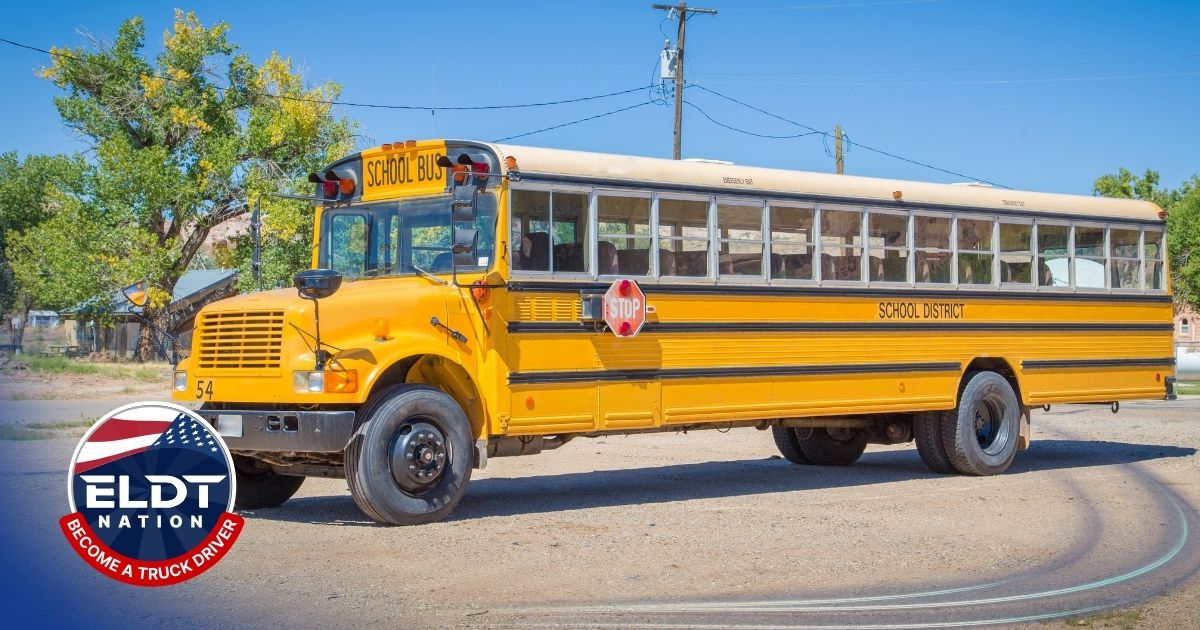
If you plan to drive a yellow school bus, you are planning for both Passenger (P) and School Bus (S), plus New Mexico’s specialized school bus testing pipeline through the PED School Bus Transportation Division. The earlier you commit to this lane, the cleaner your timeline becomes, because you can align your permit, ELDT, training, and examiner scheduling with that pipeline.
Step 2: Gather documents the MVD will actually accept
New Mexico’s CDL documentation rules are clear, but applicants still get tripped up because they bring the wrong version of the right document, or they bring documents that are too old. Your goal is to build a clean, acceptable packet before you ever schedule a serious MVD visit.
At minimum, plan to have:
A valid New Mexico driver license or qualifying credential
New Mexico requires a valid New Mexico driver license to obtain a New Mexico CLP in the standard resident workflow.
Proof of identity and lawful presence
New Mexico lists acceptable identity and status documents such as a valid U.S. passport, certified birth certificate with an official seal, or lawful permanent resident documentation, depending on your situation.
Proof of Social Security Number
Bring a Social Security card or other valid proof of SSN as required for CDL transactions.
Two proofs of New Mexico residency within the timing window
New Mexico specifies two proofs of physical residency and indicates that issuance documents must be within 60 days of the application date. This is where people most often fail on “technicalities,” so keep your documents fresh and your address consistent across them.
DOT Medical Examiner’s Certificate
New Mexico requires medical certification for most CDL applicants and ties acceptance to examiners on the National Registry of Certified Medical Examiners. If you qualify for a governmental exemption route, New Mexico describes alternate proof such as a government photo ID and an employer-signed certification form in specific cases, but most applicants should plan on the standard DOT medical card process.
A detail that helps avoid wasted trips is to keep your “CDL identity name” consistent. New Mexico’s procedural language emphasizes that the name must match your official documents; the system is not built for nicknames or informal variations. If your documents do not match, fix that before you try to push the CDL process forward.
Step 3: Take knowledge tests and secure your CLP
In New Mexico, your permit is the hinge point. It is what allows legal supervised practice and it starts the timeline that leads to your skills test eligibility.
Sequence matters. New Mexico’s materials explain that the General Knowledge test is foundational, and endorsement knowledge tests come after it. The idea is simple: you prove you understand commercial driving basics first, then you layer on specialized topics such as Passenger or School Bus.
Once you pass the required knowledge tests, you receive your Commercial Learner’s Permit. New Mexico states the CLP is issued for one year, and it also states you cannot take a skills test in the first 14 days after the CLP is issued. Plan for that 14-day window to be training time, not waiting time.
If you want to avoid burning attempts, treat knowledge testing like a performance event rather than a casual quiz. Online ELDT theory training is useful here because it builds structured understanding instead of scattered memorization. ELDT Nation’s “no fluff” course design is meant to create that kind of readiness: you learn the concept, see it applied, and lock it in through quizzes so you are not relying on luck at the kiosk.
Step 4: Complete ELDT theory and then line up behind-the-wheel
New Mexico requires ELDT compliance for first-time Class B applicants and first-time Passenger or School Bus endorsements under the federal framework, and the state’s own procedures reference the Training Provider Registry as the system used to verify completion.
This is where ELDT Nation fits: you complete theory online, self-paced, with a course built to help you pass quickly without cutting corners. The curriculum flows from introduction and basic operation into safe operating procedures, advanced operating practices, vehicle systems and reporting malfunctions, and the non-driving responsibilities that commercial drivers are held to in real jobs. That last category is where many first-time applicants underestimate the exam: trip planning, professional communication, cargo-handling thinking, and post-crash procedures.
To complete ELDT successfully, you must pass required assessments with a minimum score of 80%. After you pass, ELDT Nation submits your completion automatically to the FMCSA Training Provider Registry. That submission is what clears you to move into the behind-the-wheel phase and later into skills testing eligibility.
Step 5: Behind-the-wheel range and road training
Behind-the-wheel is where your plan becomes vehicle-specific.
If you are in the delivery lane, you are building skills around a straight truck: inspection routine, low-speed control, backing patterns, safe turns, lane management, speed control, and professional habits in traffic.
If you are in a bus lane, you add passenger-specific behaviors and procedures. A passenger vehicle test is not just “driving a bigger vehicle.” It involves safety routines, awareness of passenger risk, and different operational priorities. If you are pursuing school bus work, the expectations are even more specialized, and you should expect additional operational procedures tied to student safety.
The purpose of behind-the-wheel training is not simply to “get hours.” It is to become test-ready in three areas that the CDL skills exam is built on:
vehicle inspection consistency, so you can perform a complete and confident pre-trip routine
basic control precision, so you can execute maneuvers without drift, panic corrections, or boundary errors
road driving judgment, so you can demonstrate safe decisions under real traffic pressure
If your goal is to pass the first time, you train until those three areas feel repeatable, not until they feel merely familiar.
Step 6: Schedule the skills test with the right examiner type
In New Mexico, skills tests are administered by approved examiner groups, and the examiner you use depends on what you are testing for.
Most Class B applicants will use public third-party examiners for skills testing. New Mexico describes public examiners as those associated with certain public colleges and universities and authorized to test the general public.
School bus drivers are the exception that changes the plan. New Mexico describes that the PED School Bus Transportation Division tests all school bus drivers and is not authorized to test truck drivers or coach bus drivers. That means your school bus path must be aligned with that pipeline, not with the general third-party network.
This is also where vehicle choice becomes non-negotiable. If the job you want uses air brakes, schedule your test in an air-brake-equipped vehicle so you do not trap yourself with an air brake restriction that delays employment.
Step 7: Final issuance at MVD
After you pass your skills test, your final step returns to the MVD. New Mexico’s process guidance emphasizes that skills test scores are verified electronically and that you must bring the required documents to an MVD office that can complete the CDL issuance workflow. It also notes that not all field offices issue CDLs, which is why the “right office” is part of the plan.
.jpg)
Where we serve in New Mexico (cities and test sites)
New Mexico is built for an online-first licensing strategy. You can complete ELDT theory from anywhere in the state, then choose a testing hub that minimizes repeat trips, overnight stays, and rescheduling risk. Instead of asking “Which city is closest to me,” the better question is “Which city lets me stack steps with the least friction?”
Program details, timeline, and pricing
What you are buying with ELDT Nation Class B theory
ELDT Nation’s Class B theory course is built to remove uncertainty and wasted time from the most technical part of your CDL journey. When you enroll, you receive:
- unlimited access to all course modules and videos until you pass
- interactive quizzes that lock in understanding
- video demonstrations of real-world concepts
- text explanations that sit alongside the videos so you can review quickly
- the most in-depth concept explanations on the market
This is not a cram course. It is structured learning designed to make the permit exams and ELDT assessments feel predictable rather than stressful.
What happens at completion
When you pass the required ELDT Nation assessments with a score of at least 80 percent, your completion is automatically submitted to the FMCSA Training Provider Registry. This electronic record is what testing organizations and licensing systems check before allowing you to move forward.
You also receive a printable certificate for your records. With both of these in place, you are cleared to begin or continue behind-the-wheel training and to schedule your CDL skills test.
Pricing and payment options
The ELDT Nation Class B theory course is available for $23.00 USD. There are no hidden fees for accessing modules, quizzes, or your completion certificate.
Why ELDT Nation for New Mexico drivers
Reduce office trips by getting theory done first
In New Mexico, every in-person visit costs time and fuel. ELDT Nation lets you complete the entire theory requirement from home, on your schedule, before you ever set foot in a testing office. That means when you go in, you are there to take tests and move forward, not to find out what you forgot to do.
Designed to pass ASAP without fluff
The course is built to be clear, direct, and practical. Video lessons, voiceovers, quizzes, and text explanations work together so you are not guessing what matters. You learn what is tested and what is expected in real work.
FMCSA reporting handled automatically
Automatic submission to the Training Provider Registry eliminates paperwork delays. When it is time to train or test, your completion is already in the system.
.jpg)
Related posts
.jpg)
.jpg)


