
Class B ELDT in Minnesota - Qualifying for Straight Trucks & Buses in MN
Minnesota has a steady, long-term need for professional drivers who can safely handle larger vehicles without necessarily committing to long-haul, over-the-road trucking. School districts, transit agencies, delivery fleets and municipal services all depend on reliable Class B CDL drivers to keep people and goods moving every day, in every season.
What is a Class B CDL in Minnesota?
A Class B CDL in Minnesota is a commercial driver’s license that authorizes you to operate a specific category of larger commercial vehicles. Understanding what “Class B” actually means is important before you commit to training, because it determines what type of jobs you will qualify for and which vehicles you are legally allowed to drive.
Official definition of a Class B vehicle
Under Minnesota rules aligned with federal standards, a Class B vehicle is defined primarily by its weight and configuration. The key points are:
- It is a single-unit vehicle (not a tractor pulling a large semitrailer)
- It has a Gross Vehicle Weight Rating (GVWR) over 26,000 pounds
- It may tow a trailer, but that trailer must be under 10,000 pounds GVWR
GVWR is the manufacturer’s rated maximum total weight of the vehicle when fully loaded. You do not have to guess this number; it is printed on a data plate or sticker, usually located on the driver-side door frame or door jamb. When you open the driver’s door and look along the frame, you will typically see a label listing the GVWR and other specifications.
If the main vehicle’s GVWR exceeds 26,000 pounds and any trailer it tows is rated under 10,000 pounds, you are squarely in Class B territory. This is different from Class A, where the focus is on combinations with heavier trailers.
Common Class B vehicle types in Minnesota
In practical terms, the Class B category covers many of the vehicles Minnesota communities rely on every day. Typical examples include:
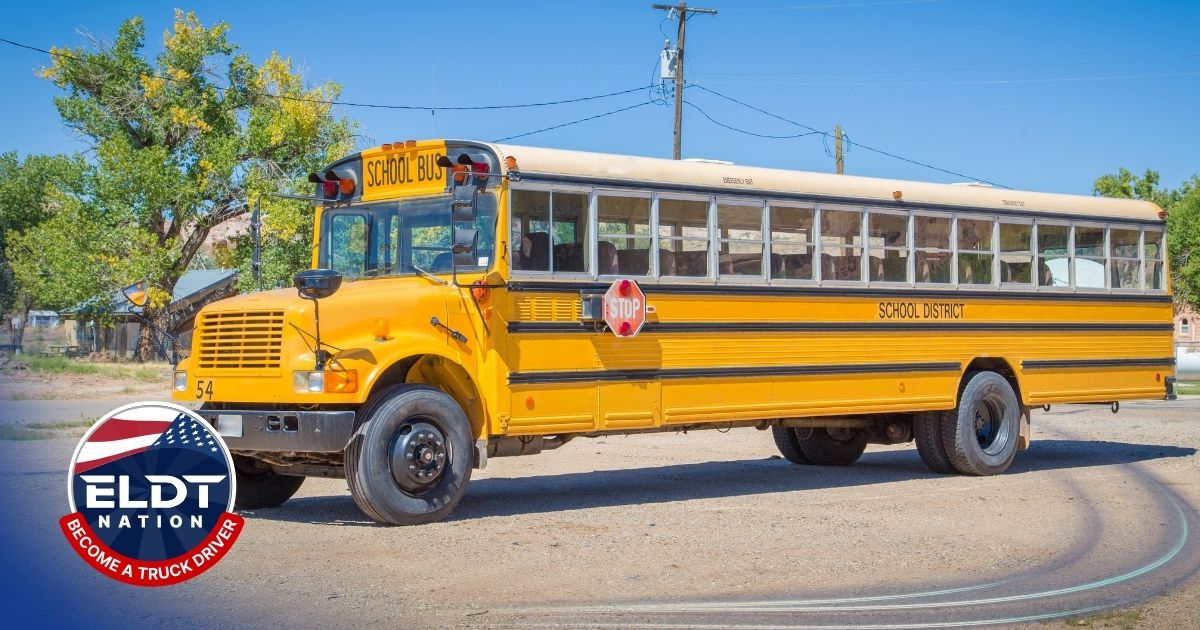
- School buses and activity buses used by public school districts and private schools
- City transit buses, commuter buses and shuttle buses operated by municipal transit agencies or private companies
- Garbage and recycling trucks, often running fixed routes through neighborhoods
- Straight box trucks and delivery trucks, used in local freight, parcel delivery, furniture and appliance delivery
- Certain construction, utility and service trucks that are heavy enough to exceed 26,000 pounds GVWR but do not pull large trailers
For a Minnesota resident, this means a Class B CDL is highly versatile. Whether you see yourself transporting students safely to school, driving routes for a city transit authority, or running a straight truck for a local delivery company, the same Class B credential is typically your starting point.
License validity, renewals and upgrades
A Minnesota Class B CDL is not a one-time achievement; it is a credential you maintain over time. In Minnesota, a CDL is generally valid for several years (commonly four) before it must be renewed, assuming you remain otherwise eligible. During renewal, you may be asked to update your medical certification, confirm your driving type (interstate or intrastate), and verify your personal information and address.
Renewal is also the time when many drivers adjust endorsements and restrictions. For example, you might:
- Add passenger (P) or school bus (S) endorsements once you have gained experience
- Remove an automatic-only or air-brake restriction by testing on a different vehicle
- Update your status from intrastate to interstate if your job changes
Some Class B drivers eventually decide to upgrade to a Class A CDL. This can be a natural progression if you move into jobs that involve tractor-trailers or heavier combinations. When that time comes, ELDT requirements and additional testing will apply again, but the experience you gain in Class B roles in Minnesota often makes the transition smoother.
For now, as a new applicant, your focus is on meeting Class B requirements, completing ELDT theory, and passing your Minnesota road test. Once you have the license in hand, you will have a solid foundation for a long trucking career, whether you stay in Class B roles or move up later.
Who needs a Class B in Minnesota?
A Class B CDL is not just a generic trucking credential; it is tied to specific types of work. In Minnesota, many employers and public agencies cannot legally put you behind the wheel of their heavier single-unit vehicles unless you hold a valid Class B CDL with the appropriate endorsements.
Typical Minnesota jobs that require a Class B CDL
Several sectors in Minnesota rely heavily on Class B drivers:
- School districts and private school bus contractors
Transporting children to and from school, athletic events and field trips requires a high level of responsibility and training. Drivers in these roles typically hold a Class B CDL with passenger (P) and school bus (S) endorsements and must meet strict safety and background standards. - City transit systems and shuttle services
Major centers such as Minneapolis–St. Paul, Duluth and Rochester operate extensive transit networks that include standard buses, articulated buses and specialized paratransit vehicles. Many of these fall under Class B. Private shuttle services serving airports, corporate campuses or hotels also rely on Class B drivers. - Municipal and county services
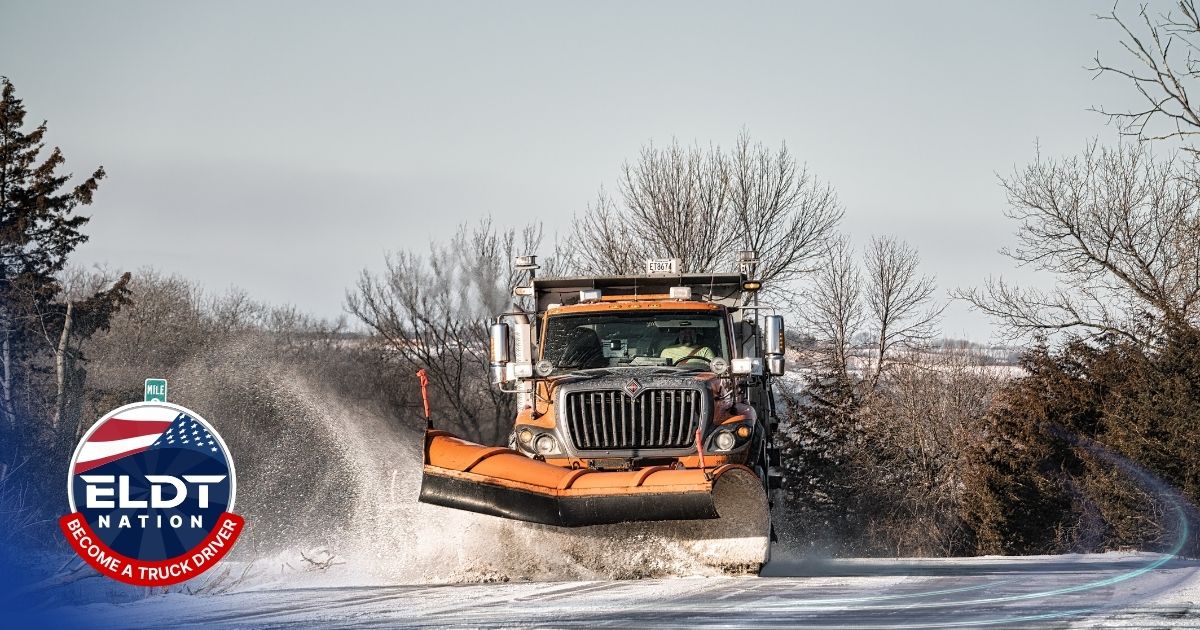
Public works departments throughout Minnesota use heavy trucks for snow removal, sanding, salting, street cleaning, garbage and recycling. Many of these trucks fall into the Class B category due to their weight and equipment. Having a Class B CDL is often a prerequisite for full-time employment in these departments. - Local delivery and LTL carriers
Companies that operate straight trucks rather than full tractor-trailers frequently require a Class B CDL. This includes furniture and appliance delivery, building materials, beverage distribution and less-than-truckload (LTL) carriers serving businesses and homes in a defined region.
In all these examples, the Class B license is not just a formality. It is what allows employers to put you in charge of expensive equipment and to trust that you understand vehicle handling, inspections and safety regulations at a professional level.
Why some drivers prefer Class B over Class A
While Class A often gets more attention because of long-haul trucking and interstate freight, many Minnesota drivers intentionally choose Class B as their primary license and stay with it for years. The reasons are practical:
- More home-daily positions
Class B roles such as school bus driver, city transit operator or local straight-truck driver almost always finish the day where they started. This is appealing for anyone with family responsibilities or a preference for a consistent home life. - Predictable schedules
School bus drivers follow the school calendar. City bus operators and local delivery drivers follow published routes and shifts. Municipal drivers are tied to public service schedules, with occasional overtime during storms or emergencies. Compared to irregular long-haul schedules, this predictability can be a major advantage. - Easier entry for new drivers and career switchers
For someone who has never driven anything larger than a pickup, jumping straight into a Class A tractor-trailer can feel overwhelming. Class B vehicles are still large and require serious training, but their handling characteristics and route patterns can be less intimidating. Many people transitioning from other careers find the learning curve more manageable. - Direct connection to the local community
Class B drivers often see the same passengers, customers or neighborhoods daily. School bus drivers know their students by name. Transit drivers recognize regular riders. Local delivery drivers build relationships with businesses on their route. For many people, this sense of connection is part of the job’s appeal.
Can I do Class B ELDT Training online in Minnesota?
Entry-Level Driver Training (ELDT) is a federal requirement, but that does not mean you must sit in a physical classroom for weeks. For the theory portion, Minnesota drivers are allowed to train online, as long as the provider is properly registered with the Federal Motor Carrier Safety Administration (FMCSA). Understanding how that works will help you avoid wasted time and make sure your training will actually count when you show up for your permit and road tests.
Federal ELDT rules allow online theory
ELDT is a national standard that applies across all states, including Minnesota. The federal rules focus on what you must learn, how the provider is approved, and how your completion is recorded. They do not require that you physically attend a classroom for the theory part.
From a practical standpoint, this means:
- You can complete ELDT theory online if the school or company is listed on the FMCSA’s Training Provider Registry (TPR).
- The provider must cover all required theory topics for Class B, including basic control, hazard awareness, vehicle inspection, basic vehicle systems, and more.
- You must pass assessments with at least the minimum required score (commonly 80 percent) to demonstrate that you actually absorbed the material.
What ELDT does still require in person is behind-the-wheel (BTW) training. That part cannot be completed online, because it involves hands-on practice in a real vehicle. You will eventually need to work with a registered Minnesota training provider who can sign off on your skills in the yard and on public roads.
In other words, the federal system is designed to give you flexibility on theory, while keeping the practical, safety-critical parts firmly grounded in real-world driving.
How Minnesota accepts ELDT completion
Minnesota, through the Department of Public Safety and its Driver and Vehicle Services (DVS) division, relies on the same FMCSA Training Provider Registry you use when you choose a course. When you finish your Class B theory training with an approved provider, that provider submits your completion electronically to the TPR.
When you later appear for your CDL skills test, DVS does not ask you to prove ELDT completion with a stack of papers. Instead, the examiner or the system checks your status in the FMCSA TPR database. If your completion is recorded there for the correct license class (Class B), you meet the ELDT theory requirement and can proceed to the skills exam. If your completion is missing, incomplete or tied to the wrong license class, you will not be allowed to test.
That is why it is so important to:
- Make sure your name and information are entered correctly when you enroll
- Train only with a provider that is clearly listed as FMCSA-approved for your license class
- Finish all modules and pass all assessments, so your completion can be reported
You do not need a paper certificate for Minnesota, but most reputable providers still give you a downloadable PDF certificate when you finish. This is useful:
- As proof for your own records
- To show to a Minnesota training school or employer
- As a backup if there is ever a question about your completion date or course type
In practice, Minnesota DVS cares about the electronic record in the federal system. When you choose a provider who handles that integration correctly, it eliminates a major administrative headache on test day.
Class B ELDT – Federal rules vs Minnesota specifics
Although ELDT is a federal program, your exact path still depends on Minnesota’s licensing process. Separating what is required nationally from what is specific to Minnesota DVS will help you avoid confusion and make sure you complete each step in the correct order.
What ELDT requires at the federal level
At the federal level, ELDT rules answer three questions: who must take training, what that training must include, and how it must be delivered and documented.
ELDT applies to:
- Individuals obtaining a Class B CDL for the first time
- Certain drivers upgrading from Class B to Class A
- Drivers adding specific endorsements, including:
- Passenger (P)
- School Bus (S)
- Hazardous Materials (H)
For your Minnesota Class B CDL, the structure of ELDT is straightforward:
- Theory training
This covers all knowledge areas required for safe operation: basic vehicle control, shifting (if applicable), backing, hazard awareness, communication, night and extreme weather driving, hours-of-service basics, cargo securement and more. Theory can be delivered online or in a classroom, but only by providers registered on the FMCSA Training Provider Registry. - Behind-the-wheel (BTW) training
This includes both range (yard) and public road practice. BTW must be conducted with a registered training provider, using appropriate vehicles, and must cover specific maneuvers and driving scenarios. Your instructor must sign off that you have demonstrated each required skill to a satisfactory level.
Once both parts are completed, your provider records your completion in the TPR. Without that entry, you cannot proceed to a state CDL skills test in Minnesota or anywhere else.
Minnesota DVS requirements on top of ELDT
On top of federal ELDT, Minnesota adds its own standard licensing requirements. To qualify for a Class B CDL, you must:
- Hold at least a valid Minnesota Class D license
- Meet age requirements, which differ for intrastate versus interstate driving
- Maintain a driving record without disqualifying offenses or active suspensions
Before you are allowed to schedule your Class B CDL skills test, Minnesota requires you to:
- Obtain a Commercial Learner’s Permit (CLP) by passing the appropriate written exams:
- General knowledge for Class B
- Air brakes, if you plan to drive vehicles with air brakes and avoid an “L” restriction
- Passenger and school bus tests if you will seek P and S endorsements
- Complete the self-certification process, declaring whether you will drive intrastate only (within Minnesota) or interstate (crossing state lines), and which type of commerce applies to you
- Provide a valid medical examiner’s certificate (DOT medical card) if your chosen driving category requires it
Minnesota DVS will verify your ELDT completion in the federal TPR, confirm your CLP status and documents, and then allow you to take the road test. ELDT is therefore one piece of a larger licensing process that combines federal training rules with Minnesota’s own safety and documentation standards.
Previous or out-of-state CDL and ELDT waivers
Not everyone comes to Minnesota CDL licensing as a first-time applicant. Some drivers:
- Held a CDL before the ELDT rules took effect
- Are transferring a valid CDL from another state to Minnesota
- Are upgrading or modifying an existing Minnesota CDL
In some of these situations, ELDT requirements may be partially or fully waived. For example:
- A driver who has held a valid, equivalent CDL continuously since before ELDT went into effect may not need to repeat theory training for the same class.
- When transferring an out-of-state Class B CDL, Minnesota may recognize the existing credential without requiring full ELDT theory again, as long as it meets federal equivalency.
However, there are important caveats:
- Adding certain endorsements (P, S, H) often triggers new ELDT requirements, even if you already hold a CDL.
- Upgrading from Class B to Class A will require new ELDT-compliant training for the higher class.
- Minnesota may apply its own procedures for verifying your prior CDL history and deciding whether a waiver applies.
Because edge cases can be nuanced, anyone with a prior or out-of-state CDL should always consult the most recent Minnesota CDL manual or speak directly with a Minnesota DVS office. That way, you do not assume you are exempt from ELDT, only to discover at the last minute that certain training is still required.
.jpg)
Step-by-step: getting your Class B CDL in Minnesota
Turning the idea of “I want to drive buses or straight trucks in Minnesota” into a real Class B CDL license is much easier when you see the process laid out in clear steps. The path always includes the same basic elements, even though the exact timing will vary depending on your schedule and test availability.
Step 1 – Confirm you are eligible
Before you spend money on training or testing fees, make sure you meet the basic eligibility criteria. In Minnesota, this means:
- You must hold a valid Minnesota Class D license
- You must meet the minimum age for the type of driving you want to do:
- Intrastate (within Minnesota only) allows certain younger drivers
- Interstate (across state lines) generally requires you to be at least 21
- Your driving record should be free of recent serious violations, suspensions or disqualifying offenses that could block CDL issuance
If you are unsure about your record, it is worth obtaining a copy of your driving history and, if needed, clarifying any issues with Minnesota DVS before you move forward.
Step 2 – Study the Minnesota CDL manual and Class B concepts
The Minnesota CDL manual is your official reference. Even with a strong online course, you should spend time with the manual to understand how the state phrases questions and what topics are emphasized. Focus especially on:
- General knowledge
This covers core CDL concepts that apply to all commercial drivers: basic vehicle control, space management, hazard awareness, emergency maneuvers, and rules of the road. - Air brakes
If you ever want to drive heavy vehicles with air brakes (which is common in buses and straight trucks), you will need to pass the air brakes written test and avoid an “L” restriction. The manual explains air brake components, brake lag, brake fade, pre-trip checks and safe use. - Passenger and school bus sections
If your long-term goal is to drive city buses or school buses, review these sections early. Even if you do not test for P and S endorsements immediately, understanding passenger loading, securement, emergency evacuation and student safety procedures will help you see the bigger picture of your future job.
Reading the manual alongside an online ELDT course creates a stronger foundation: the course provides structure and explanations, while the manual shows you exactly how Minnesota will test your knowledge.
Step 3 – Enroll in an ELDT-approved Class B theory course
Once you understand the basics from the manual, it is time to enroll in formal ELDT theory training. For Minnesota drivers, choosing an FMCSA-approved provider is essential. ELDT Nation meets this requirement and is designed specifically around the needs of new CDL students.
The enrollment process is simple:
- Visit the course page for the ELDT Approved Theory Course – Class B
- Create an account using your email address and full legal name (this must match your CDL documents)
- Apply any coupon code if available, then complete your purchase
- Log in to access your course library and start the Class B curriculum
From that point, every module you complete and every quiz you pass moves you closer to ELDT completion. Because everything is online, you control the pace, whether that means a few hours each evening or longer study sessions on weekends.
Step 4 – Complete your Class B ELDT theory online
The strength of ELDT Nation’s Class B course lies in its structure and depth. Instead of rushed, surface-level material, you work through 33 in-depth video modules that explain concepts in a clear and practical way.
Each module typically includes:
- A video lesson demonstrating concepts in action and explaining why procedures matter in real driving
- Accompanying text explanations so you can skim, re-read and reinforce the main points
- An interactive quiz to test your understanding and prepare you for the final assessments
To complete ELDT theory successfully, you:
- Progress through all required modules
- Achieve at least the minimum passing score (commonly 80 percent) on assessments
- Review any weak areas by rewatching videos or retaking quizzes
The content is designed for real Class B work, not just for passing a test. You will cover:
- Thorough vehicle inspections, including what to look for and how to communicate defects
- Basic control of large single-unit vehicles, including turning, backing, lane changes and space management
- Air brake safety, including pre-trip checks, understanding low-air warnings and avoiding brake fade
- Cargo handling and securement concepts relevant to straight trucks, as well as passenger safety principles for buses
- Minnesota-relevant driving conditions, such as winter weather, black ice, reduced visibility and city traffic with frequent stops and pedestrians
Because you have unlimited access until you pass, you can move through the material at the speed that matches your life. Some Minnesota drivers complete theory in a few focused days; others spread it out over several weeks to fit around work and family.
Once you have completed all modules and passed the assessments, ELDT Nation:
- Submits your completion electronically to the FMCSA Training Provider Registry under your correct license class
- Provides a printable PDF certificate that you can keep or share with a training partner or employer
At that moment, your federal theory requirement for Class B is complete.
Step 5 – Get your Minnesota Commercial Learner’s Permit (CLP)
With ELDT theory underway or completed, your next formal step is to obtain a Commercial Learner’s Permit. The CLP is what allows you to practice driving a commercial vehicle on public roads under supervision.
To obtain a CLP in Minnesota, you will typically:
- Visit a DVS exam station
- Present required identification and residency documents, along with any medical certification needed for your driving category
- Take and pass the written knowledge tests, which may include:
- General knowledge for Class B
- Air brakes, if your future vehicle uses them
- Passenger and school bus tests, if you intend to pursue P and S endorsements at the same time
Bringing the correct documents is critical. Usually, this includes proof of identity, legal presence, Minnesota residency and your existing Class D license. Requirements can change, so checking Minnesota DVS guidance before you go is wise.
Once you pass the tests, you receive your CLP, which is valid for a defined period. During this time, you can practice driving a Class B vehicle with a qualified CDL holder beside you, but you cannot yet drive solo or for pay as a commercial driver.
Step 6 – Behind-the-wheel training with a Minnesota provider
With your CLP in hand and ELDT theory complete, you are ready for behind-the-wheel training. This is where you turn what you learned in videos and manuals into physical skills.
A typical Minnesota behind-the-wheel program will cover:
- Vehicle inspections and checklists
Practicing complete pre-trip inspections, learning to identify and describe defects, and getting comfortable with the inspection flow used on the road test. - Basic control maneuvers
Straight-line backing, offset backing, alley dock maneuvers (where applicable), turning in tight spaces, lane positioning and mirror use. - On-road driving
Residential streets, city traffic, rural highways and possibly freeway segments, depending on your future job. If you aim to drive buses, you may also practice:- Approaching and leaving bus stops
- Handling passenger loading zones
- Negotiating tight urban streets and downtown areas
The goal of behind-the-wheel training is not just to pass the test, but to prepare you for day-to-day Class B work in Minnesota, including winter driving, hills, bridges and sharing the road safely with cars, bicycles and pedestrians.
Step 7 – Schedule and pass your Minnesota Class B CDL road test
When you and your instructor agree that you are ready, the next step is to schedule your Class B CDL skills test with Minnesota DVS. Depending on your area, appointments may be made online, by phone, or directly through a testing location.
The test itself includes three main parts:
- Pre-trip inspection
You must demonstrate a thorough understanding of the vehicle’s components and safety checks, explaining what you are inspecting and why. - Basic control skills
In a closed course or yard, you will perform specific backing and maneuvering exercises, proving that you can control the vehicle precisely in limited space. - On-road driving
An examiner rides with you on public roads, assessing how you handle intersections, lane changes, turns, railroad crossings, speed management and hazard awareness in real traffic.
When choosing a test site, consider:
- Proximity to where you trained
- Traffic patterns similar to your future job (for example, urban routes if you plan to drive city buses)
- Availability of appointments that match your training timeline
Passing the skills test is the final practical hurdle between you and your Class B CDL.
Step 8 – Apply and pay for your Minnesota Class B CDL
After you pass the road test, you return to a Minnesota DVS office to formally apply for your Class B CDL. At this stage you will:
- Complete any remaining paperwork
- Pay the required CDL issuance fees
- Confirm which endorsements (P, S, air brakes) you have earned and whether any restrictions (such as automatic-only) apply
Once the license is issued, you can begin working as a Class B driver in Minnesota, provided you also meet any employer-specific requirements such as background checks, company road tests or probationary periods.
Minnesota Class B endorsements, restrictions and vehicle choices
Even though a Class B CDL already qualifies you to drive large single-unit vehicles, the exact jobs you can accept in Minnesota depend heavily on your endorsements, restrictions and the vehicle you test in. Understanding how P, S, air brake and transmission choices shape your everyday work will help you plan the smartest path from the very beginning.
Passenger and school bus endorsements (P & S)
For many Minnesota drivers, the ultimate goal of getting a Class B CDL is to sit behind the wheel of a bus. Whether it is a bright yellow school bus on winter mornings or a city transit bus running regular routes, two endorsements become especially important:
- Passenger (P) endorsement
- School Bus (S) endorsement
You need a Passenger (P) endorsement if you will be driving vehicles designed to carry a certain number of passengers (often 16 or more including the driver, depending on configuration and state definitions). This includes:
- City buses and commuter buses
- Airport shuttles and larger hotel or corporate shuttles
- Some paratransit vehicles and specialty passenger vehicles
You need a School Bus (S) endorsement if you will be transporting school children in vehicles defined as school buses under Minnesota and federal rules. The S endorsement sits on top of the P endorsement, meaning:
- You must qualify as a passenger vehicle driver first
- You then meet additional requirements specific to student transportation
To earn these endorsements, Minnesota requires:
- Extra knowledge tests focused on passenger safety, loading and unloading, emergency procedures, railroad crossings and special hazards related to students
- Additional skills test components, often using a bus as the test vehicle, that assess how you handle stops, mirrors, blind spots, interior checks and emergency equipment
This extra testing exists because bus drivers carry people, not freight. The consequences of poor decision-making are different, and the law reflects that.
Many Minnesota Class B holders deliberately aim for bus work because it offers:
- Steady, predictable routes – transit and school routes rarely disappear overnight and are planned long in advance
- Structured schedules – school calendars and fixed transit timetables help drivers plan their personal lives
- Community-focused work – drivers see the same riders daily, becoming a familiar and trusted presence in their neighborhoods
If you see yourself in a long-term role transporting passengers, it is usually worth planning for P and S endorsements from the very beginning, or at least leaving room in your training path to add them.
Air brake restrictions and choosing the right training vehicle
The vehicle you use for your CDL skills test does more than just help you pass the exam. It permanently affects which vehicles you can drive without additional testing. For Class B drivers in Minnesota, two issues show up repeatedly: air brakes and transmission type.
If you take your test in a vehicle that does not have full air brakes, or if you fail the air brakes knowledge test, you will receive an “L” restriction, indicating that you are not authorized to operate vehicles with air brakes. This can severely limit your job options, because many:
- School buses
- City buses
- Garbage trucks and public works vehicles
- Heavy straight trucks
are equipped with air brakes.
On the other hand, if you:
- Pass the air brakes written exam, and
- Test in a Class B vehicle with full air brakes,
you can usually drive both air-brake and hydraulic-brake Class B vehicles without that restriction. This makes you far more attractive to employers, especially municipalities and transit agencies, who often standardize on air-brake equipment for safety and durability.
The same principle applies to transmission type. If you test in:
- An automatic transmission, you may receive an automatic-only restriction, limiting you to automatic-equipped commercial vehicles.
- A manual transmission Class B vehicle, you generally keep the ability to drive both manuals and automatics in that class.
Because many modern fleets in Minnesota are moving toward automatics, an automatic-only restriction is not always a problem. However, certain employers, especially in construction or mixed fleets, may still prefer drivers who are comfortable with manual transmissions.
For most new Class B applicants in Minnesota, the most flexible long-term choice is to:
- Learn and test in a full air-brake vehicle
- Decide carefully with your training provider whether to test in a manual or automatic, based on the job market in your region
Choosing the right training and test vehicle upfront can save you from having to retest later to remove restrictions, which costs additional time and money.
Intrastate vs interstate – how it affects Minnesota Class B drivers
When you apply for or renew your CDL in Minnesota, you must declare whether you will be driving intrastate only (within Minnesota) or interstate (crossing state lines). This choice affects your eligibility, age requirements and medical standards.
- Intrastate driving (within Minnesota)
Many Class B jobs are entirely intrastate:- City transit and school buses
- Municipal public works and sanitation
- Local delivery within a defined area
In these roles, your routes stay inside Minnesota borders. The regulations you follow still include federal CDL rules, but some flexibility may exist for younger drivers or specific medical categories, depending on Minnesota law.
- Interstate driving (across state lines)
Some Class B roles, especially straight-truck regional freight or charter bus work, may require you to cross into neighboring states such as Wisconsin, Iowa, North Dakota or South Dakota. The moment you cross a state line in commercial operation, interstate rules apply. This typically means:- Stricter age requirements (commonly 21 or older)
- Full federal medical qualification standards
- Closer scrutiny of hours-of-service compliance and other safety regulations
From a career standpoint, intrastate-only work can provide excellent stability and local familiarity, while interstate eligibility opens up additional regional routes, charter opportunities and specialty contracts. When planning your Class B path, it is wise to:
- Decide whether you want to keep your options open for interstate work
- Make sure your self-certification and medical card match your intended type of driving
- Revisit that decision later in your career if your job changes
By understanding the interplay between endorsements, restrictions and your driving category, you can shape a Minnesota Class B license that matches both your immediate job goals and your longer-term career plans.
.jpg)
Where we serve in Minnesota (cities and test sites)
Because ELDT Nation’s Class B theory course is completely online, your physical location in Minnesota never limits your ability to start training. However, where you live and where you plan to test do influence how you coordinate behind-the-wheel training and CDL road tests.
Program details, timeline and pricing – ELDT Nation’s Class B course
For Minnesota drivers, it is not enough to know that a course is “approved.” You need to understand what you are actually getting, how long it will realistically take, what happens when you finish and what it will cost.
What is included in the Class B ELDT online course
ELDT Nation’s Class B theory course is designed as a complete, self-contained preparation for the federal ELDT theory requirement and for your Minnesota written exams. When you enroll, you gain access to:
- 33 in-depth video modules
Each module focuses on specific Class B topics such as inspections, basic control, shifting (where relevant), hazard perception, air brake operation, cargo and passenger safety and extreme weather driving. The explanations aim to go beyond memorizing rules and instead show you why procedures matter in real vehicles on Minnesota roads. - Interactive quizzes
At the end of modules and sections, quizzes test your understanding and highlight weak spots. The questions mirror the style and content of CDL exam questions, helping you adapt to how information will be tested at DVS. - Accompanying written explanations
Alongside each video, you can read through key concepts in text form. This is particularly valuable when you want to quickly review a topic without watching the entire video again, or when you prefer to study by reading. - Unlimited access until you pass your permit test
Your purchase gives you continued access to the course until you reach your goal of passing your Minnesota CLP tests. You can move forward, pause, rewind and revisit as often as necessary without worrying about the course expiring.
This combination of visual, interactive and text-based learning is designed to match different learning styles while still covering all federal ELDT requirements for Class B theory.
Why ELDT Nation for Minnesota Class B drivers?
With multiple training providers available, it is reasonable to ask why you should choose ELDT Nation specifically for your Class B ELDT in Minnesota. The answer lies in three pillars: compliance, course design and real-world results.
FMCSA-approved and accepted in all 50 states
First and most important, ELDT Nation is an FMCSA-approved training provider listed in the Training Provider Registry. This means:
- The curriculum has been reviewed and aligned with federal ELDT standards
- Completion records are correctly reported to the TPR, which Minnesota DVS uses to verify eligibility for CDL skills tests
- The training is recognized not just in Minnesota, but in all 50 states, which is valuable if your career later moves you across state lines
For you as a Minnesota driver, this ensures that your time and money are not wasted on a course that the state will not accept. Your ELDT theory is valid, portable and anchored in federal requirements.
Course design: “no fluff, just what helps you pass”
A common complaint about some online CDL courses is that they are either too shallow or padded with content that does not actually help on the test or on the road. ELDT Nation’s approach is to deliver:
- In-depth concept explanations that show not just what to do, but why
- Clear, structured modules that follow the logic of real driving, from understanding your vehicle to handling emergencies
- Minimal filler content, so your time is spent on material that improves your knowledge, your confidence and your chances of passing on the first attempt
Real-world Class B scenarios are woven throughout the training, including:
- Handling a fully loaded straight truck in city traffic and on narrow rural roads
- Managing bus stops safely in winter conditions
- Interacting with passengers, customers and other road users in busy Minnesota environments
The result is a course that prepares you not just to answer multiple-choice questions, but to think like a professional Class B driver in Minnesota.
.jpg)
Related posts

%20Endorsement%20%E2%80%93%20Online%20Theory%20Aligned%20With%20FMCSA%20Rules.jpg)


