
Class B ELDT in Missouri - City & Utility Fleet Career Track in MO
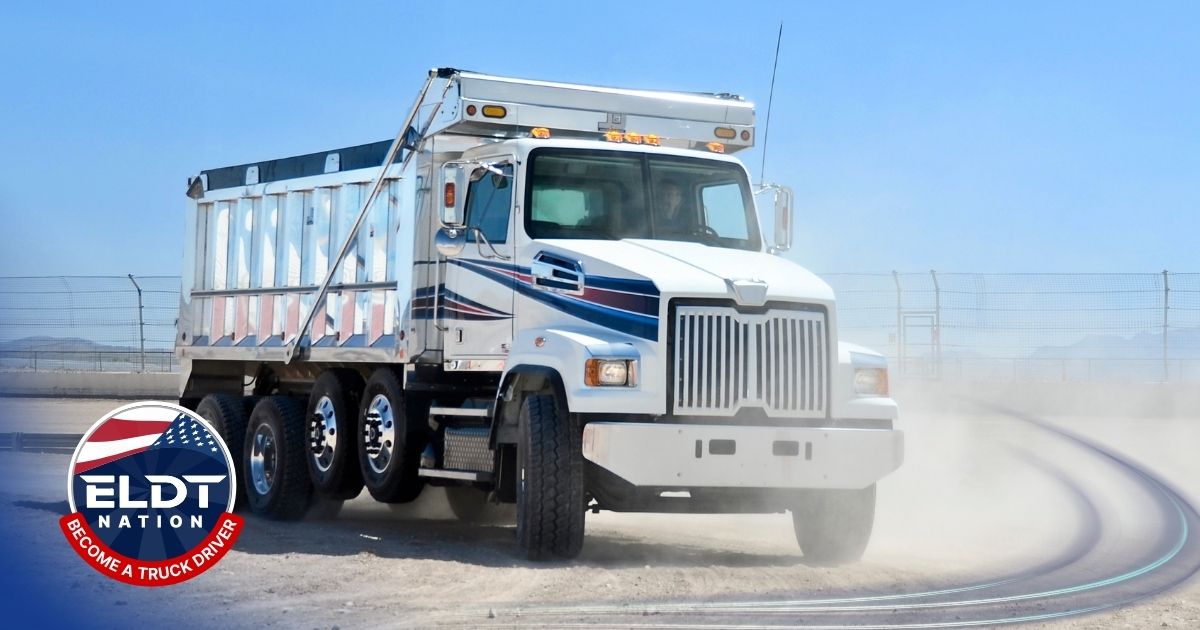
Many people think “CDL” and immediately picture an 18-wheeler running cross-country. In reality, a large portion of Missouri’s professional driving jobs are Class B roles that keep you close to home. A Class B CDL allows you to operate single commercial vehicles over 26,001 lbs GVWR, with trailers under 10,000 lbs. This includes the backbone of local fleets:
- City dump trucks, snow plows and salt spreaders used in winter operations
- Refuse and recycling trucks working established routes in neighborhoods
- Utility service trucks for electric, water and gas companies
- Straight trucks used by local vendors, construction firms and delivery operations
- Transit and shuttle buses serving urban and suburban routes (with the right endorsements)
What is a Class B CDL and where it fits in Missouri’s job market
Before you enroll in any course or pay any fee, it helps to understand exactly what a Class B CDL is – and what it is not. This clarity prevents surprises later and helps you choose the right training and endorsements from the start.
Class B vs. Class A – what is the real difference?
Both Class A and Class B are commercial driver’s licenses governed by the same federal regulations, but they authorize different kinds of vehicles and work.
A Class A CDL is designed for combination vehicles – a tractor and trailer – where the combination weight is 26,001 lbs or more, and the trailer alone is over 10,000 lbs. These are typical long-haul or regional trucks: 53-ft dry vans, refrigerated trailers, flatbeds, and similar combinations. The work often involves overnight or multi-day trips.
A Class B CDL focuses on single vehicles with a GVWR of 26,001 lbs or more, towing trailers up to 10,000 lbs. Instead of pulling a long trailer, you are usually driving a straight truck, a bus, or a heavy single-unit vehicle with a small attached equipment trailer at most.
In practice, that difference leads to different careers:
- Class A is the standard for long-haul trucking and many regional freight positions.
- Class B is the standard for local, city-based work where you drive a heavy commercial vehicle but return home daily.
Many drivers start with Class B because they want to build experience, earn a good wage, and understand the industry without committing to weeks on the road. Some later upgrade to Class A; others choose to stay in Class B roles long-term and build seniority in city or utility fleets.
Class B vehicles you will see every day in Missouri
If you drive through almost any Missouri town or city, you can easily spot Class B vehicles in action. They are the quiet backbone of daily life:
- City dump trucks and snow plows – used for road maintenance, winter operations and construction support.
- Salt spreaders and sand trucks – essential during snow and ice events to keep roads passable.
- Refuse and recycling trucks – running fixed routes through neighborhoods in St. Louis, Kansas City, Springfield and smaller cities.
- Utility service trucks – bucket trucks and service rigs used by electric, gas and water utilities to maintain infrastructure.
- Straight box trucks – delivering building materials, appliances and other goods locally.
- Transit buses and shuttle buses – operating on city routes, park-and-ride circuits or contracted shuttle lines, often with Passenger or School Bus endorsements.
These are the vehicles that repair potholes after a storm, restore power after an outage, clear snow from streets, and move people around cities. When you obtain a Class B CDL and the right endorsements, you become eligible to operate exactly these kinds of equipment for public agencies and private companies across Missouri.
Who is the ideal candidate for a Class B CDL in Missouri?
Class B is not just for one type of person. It is a strong fit for several profiles:
- Career changers who want local work
Individuals shifting from warehouse jobs, construction labor, retail, or other non-driving roles often choose Class B because it offers a clear skills upgrade and pays more, without forcing them to leave home for days at a time. - Non-CDL drivers ready to go professional
People already driving smaller company vehicles, vans, light trucks, or operating forklifts often want their next step to be a professional license. Class B gives them that jump while keeping the type of work familiar: local routes, early mornings, physical but manageable days. - Those targeting city, municipal, DOT and utility fleet careers
If your goal from the start is to work for a city street department, county road crew, state highway maintenance team or a utility company, Class B is usually the entry ticket. These employers value reliability, safety and compliance, so a solid ELDT record plus a clean Class B license is exactly what they look for in job postings.
In other words, if you want a professional license, local work, and a realistic path into public or utility employment in Missouri, Class B ELDT is one of the most targeted investments you can make.
Missouri job outlook: City, county and utility fleet careers with a Class B
Once you understand what a Class B CDL allows you to drive, the next question is obvious: what does the job market look like in Missouri?
The short answer is that Missouri’s infrastructure and services rely heavily on Class B drivers. Roads, utilities, and public services cannot function without properly licensed operators behind the wheel of heavy vehicles.
Typical Missouri employers hiring Class B drivers
The range of employers is wider than many people expect. Some of the most common categories include:
Can I do Class B ELDT Training online in Missouri?
A common question for future drivers is whether they really have to sit in a classroom or whether they can complete ELDT online, especially while working another job or managing family responsibilities. The good news is that for the theory portion of ELDT, online training is not only allowed but fully integrated into the federal system.
Theory vs. behind-the-wheel – two different requirements
ELDT is divided into two major components:
- Theory Training
This covers the knowledge side of commercial driving: regulations, vehicle systems, inspection procedures, hours-of-service rules, hazard awareness, basic control, braking, and more. Theory can be completed online as long as the provider is listed on the FMCSA Training Provider Registry. - Behind-the-Wheel (BTW) Training
This must be done in a commercial vehicle, on a range and on public roads, with a qualified instructor. BTW training cannot be done online; it is practical and hands-on by design.
You must complete both theory and behind-the-wheel with approved providers before you are allowed to sit for the Missouri Class B CDL skills exam. However, they do not have to be completed in the same place. Many drivers choose to complete theory online first and then select a local driving school or employer for BTW training.
Online ELDT acceptance in Missouri
Because ELDT rules are federal, a properly completed online theory course from an FMCSA-approved provider is valid in Missouri, just as it is in any other state. When you finish your Class B theory course with ELDT Nation:
- Your results are submitted electronically to the FMCSA’s Training Provider Registry.
- When you go to schedule or take your Missouri Class B skills test, the state system checks the TPR to confirm you have met the theory requirement.
There is no separate “Missouri-only” theory course. The key is not where you physically sit when you learn, but whether your provider is recognized by FMCSA and correctly reports your completion. ELDT Nation fulfills this requirement, which is why Missouri applicants use it as the theory component before moving into their local behind-the-wheel training.
How ELDT Nation’s self-paced Class B course works for Missouri residents
For Missouri residents, the structure of ELDT Nation’s online training is particularly convenient. There are no classrooms, no fixed start dates, and no commute. You simply need a device with internet access and enough discipline to work through the modules.
When you enroll in the Class B ELDT course, you gain:
- Unlimited access to all course modules and videos until you pass
You can log in as often as you need, re-watch explanations, and revisit quizzes if there are topics you want to reinforce before moving forward. - Video lessons in every module
Concepts are demonstrated visually and explained by experienced instructors, rather than being left purely to dense text. This is especially helpful when understanding vehicle dynamics, braking, and inspection procedures. - Interactive quizzes tied to the course material
Instead of one final test at the end, you build knowledge progressively, verifying your understanding as you go. Achieving the minimum passing scores prepares you for real DMV exam questions. - Accompanying text explanations next to videos
If you prefer to skim, re-read or study quietly, you can rely on structured written explanations that match the video content. This helps different learning styles and makes it easier to study during short breaks. - Access from anywhere in Missouri
Whether you live in St. Louis, Kansas City, Springfield, Columbia, Independence, or in a rural county, the course works the same way. You are not limited by the closest school’s classroom schedule.
Where online ELDT fits relative to your CLP
You can complete your online ELDT theory before or after you get your Commercial Learner’s Permit (CLP), but you must have ELDT finished and recorded in the TPR before Missouri will allow you to take the skills exam.
For many future Class B drivers, the most efficient timeline looks like this:
- Study the state’s CDL manual and pass the written tests to obtain your Missouri Class B CLP.
- Enroll in ELDT Nation’s Class B course and work through the modules in focused blocks, using your CLP studies as a foundation.
- Complete ELDT theory and have your results reported to the TPR while you arrange behind-the-wheel training with a school or employer.
- After behind-the-wheel training, schedule your Missouri skills exam, knowing the theory requirement is fully satisfied.
However, if your schedule is tight or you are still deciding on timing, you can also start ELDT theory first to understand what will be expected of you, and then move on to the CLP. The self-paced nature of ELDT Nation’s course allows you to structure your preparation around your current job, family commitments and financial planning.
.jpg)
ELDT: federal rules vs Missouri specifics
Entry-Level Driver Training is now a fixed part of the CDL landscape in every state, including Missouri. If you are planning to get your Class B CDL, you need to understand how the federal ELDT rules work and how they interact with Missouri’s own licensing process.
Federal ELDT rules in plain language
In early 2022, the Federal Motor Carrier Safety Administration (FMCSA) fully implemented nationwide ELDT requirements. From that point forward, certain CDL applicants must complete ELDT before they can take a skills test or, for some endorsements, a knowledge test.
In practice, federal ELDT rules say:
- You must complete ELDT if you are:
- Obtaining your first Class A or Class B CDL.
- Upgrading from Class B to Class A.
- Adding certain endorsements: Hazmat (H), Passenger (P), School Bus (S).
- Your ELDT must be taken from a provider listed on the FMCSA Training Provider Registry (TPR).
- If a provider is not on the TPR, your training will not be recognized by the state.
- Only TPR-registered providers can submit training records for you.
- ELDT has two main parts:
- Theory (knowledge) training – which can be done online, as with ELDT Nation.
- Behind-the-wheel (BTW) training – which must be completed in a vehicle, on the range and on the road.
- Once you complete ELDT, your provider must electronically upload your completion record to the TPR.
- The DMV does not take your word for it. They check the TPR to confirm you have met federal requirements.
If you try to schedule a skills test for your first Class B CDL and there is no matching ELDT completion in the TPR under your name and CLP number, the state cannot legally test you. That is why it matters so much that the provider you choose is correctly registered and following the federal reporting rules.
How Missouri’s rules fit into the picture
Missouri must follow these federal ELDT rules, but it also has its own state-level conditions you need to respect. Think of it as two layers:
- Federal layer – defines who needs ELDT and what ELDT must cover.
- Missouri layer – defines how you get your permit, where you test, and which local requirements you must meet.
The most important Missouri specifics include:
Age requirements for intrastate vs. interstate driving
- To drive within Missouri only (intrastate), many states allow certain CDL privileges from age 18 upward, subject to restrictions.
- To drive across state lines (interstate) or transport hazardous materials, federal rules normally require you to be 21 or older.
The exact intrastate allowances and restrictions can be adjusted or updated, so you should always confirm with Missouri’s current CDL handbook or DMV website. As a general rule, if you are under 21, you should expect to be limited to intrastate work and to have employers that understand and accept those limits.
Medical card and DOT physical expectations
ELDT does not replace the requirement for a DOT physical. In Missouri, as in every other state, CDL applicants must:
- Undergo a medical examination with a certified medical examiner.
- Gain a valid Medical Examiner’s Certificate (medical card).
- Keep that card up to date and ensure the DMV has your current status.
This medical card confirms that you meet the minimum health standards for safe commercial driving, such as:
- Adequate vision and hearing
- Acceptable blood pressure
- No disqualifying conditions or unmanaged medical issues
Typically, you will want your DOT physical completed and documented before you invest heavily in training and testing, so that you know you are medically qualified to pursue a Class B career.
Missouri written exams and skills tests
Federal rules dictate what topics must be covered, but Missouri decides how it tests you. For a Class B CDL, you should expect:
- Written knowledge exams at the DMV or state testing location, including:
- General knowledge (for all CDL classes)
- Air brakes (for most city and utility vehicles with air brake systems)
- Passenger and/or School Bus if you plan to drive transit or school buses
- Skills testing at approved Missouri CDL sites, typically including three segments:
- Pre-trip vehicle inspection
- Basic control skills (backing, offset, alley dock, as required by state)
- On-road driving in various traffic conditions
The structure is built from federal standards, but the logistics—where you go, how appointments are scheduled, how test routes are designed—are all Missouri-specific.
How Missouri checks your ELDT completion in the TPR
Once you have completed your ELDT theory and behind-the-wheel training with approved providers, those providers submit your completion records to the FMCSA Training Provider Registry.
When you show up in Missouri to schedule or take your Class B skills exam, the state system communicates with the TPR to verify:
- Your identity (name, date of birth and sometimes CLP number)
- The type of ELDT you completed (e.g., Class B theory, BTW range, BTW public road)
- The date of your completion
If the system does not see a matching record, Missouri is not allowed to administer the skills exam for that CDL or endorsement type. At that point, you would need to straighten out your training records before you move forward. This is precisely the kind of delay that can cost you weeks of time and, in some cases, opportunities with employers waiting on you to finish.
Why an FMCSA-approved provider like ELDT Nation matters at the DMV
Choosing an FMCSA-approved provider such as ELDT Nation is less about marketing and more about avoiding roadblocks when the state checks your eligibility. When you use ELDT Nation for your Class B theory training, you gain several advantages that matter in the Missouri DMV or Highway Patrol office:
- Your course is structured to meet the exact federal theory requirements for Class B, so you are not missing topics that inspectors expect you to know.
- Your assessments are documented, and your successful completion is recorded in a way that can be properly transmitted to the TPR.
- ELDT Nation is already recognized in the TPR, so when your record is submitted, it fits seamlessly into the system Missouri uses to confirm you are eligible to test.
This reduces the risk of uncomfortable surprises such as:
- Finding out that your “training” does not appear in the TPR at all.
- Having to redo theory training because a provider was not compliant.
- Losing your skills test slot because your eligibility cannot be verified in time.
By getting your Class B ELDT through a trusted, FMCSA-approved provider like ELDT Nation, you make the DMV portion of the process smoother and keep your focus where it belongs: preparing to perform on the skills test and, ultimately, on the job.
Step-by-step: getting your Class B in Missouri
The following step-by-step overview is designed to show you what typically happens in order, from initial eligibility to landing city or utility fleet work.
Step 1 – Check your eligibility
Before you invest in courses, time off work, and test fees, you should verify that you meet the basic conditions for a Class B CDL in Missouri. This usually involves:
- Age
- For intrastate driving (within Missouri only), many states allow CDL operation starting at 18, subject to state-specific conditions.
- For interstate driving and transporting hazardous materials, you should expect to need to be at least 21.
- Valid driver’s license
You must already hold a valid, non-commercial driver’s license. Your existing driving record will be reviewed, so serious violations or suspensions can affect your eligibility. - Residency status
You need to meet Missouri’s residency requirements, which typically means having a valid Missouri address and documentation showing you live in the state. - Basic medical fitness
You must be able to qualify for a DOT medical card issued by a certified examiner. If you have health conditions (such as diabetes, cardiac issues, sleep apnea, or vision concerns), talk to a medical professional early to ensure they can be managed within DOT standards.
Confirming all of this in advance protects you from discovering a disqualifying issue after you have already invested money in courses or exam fees.
Step 2 – Prepare and apply for your Missouri Class B CLP
To legally practice driving a commercial vehicle on public roads with an instructor, you need a Commercial Learner’s Permit (CLP). Getting that permit requires preparation and a visit to the DMV for written tests.
Written tests you will face for Class B
For a typical Missouri Class B applicant, you should be prepared to take:
- General Knowledge test
This covers broad CDL topics such as vehicle control, cargo handling basics, safety procedures, and regulations applicable to all commercial drivers. - Air Brakes test
Most city, county and utility trucks run on air brake systems. If you skip this test, you will likely end up with an air brake restriction on your license, which can disqualify you from many Class B fleet jobs. - Passenger and/or School Bus tests (if relevant)
If your goal is to drive transit buses, shuttles or school buses, you will eventually need passenger-related endorsements. Some candidates take the written Passenger or School Bus exams at the same time as their CLP if they already know they are going into bus work.
Studying the Missouri CDL manual thoroughly before your DMV appointment is essential. Many candidates also use online practice tests to get used to the question format and timing.
Documents and fees at the DMV
When you apply for your CLP, you should be ready to bring:
- Proof of identity and lawful presence.
- Proof of Missouri residency (often two documents with your address).
- Your current driver’s license.
- Your medical card if already completed.
- Payment for the permit and test fees as defined by Missouri.
Fees can change over time, so always check the latest information on the Missouri DMV website or by contacting a local office before you go.
Once you pass the written exams and meet documentation requirements, you will be issued a Class B CLP. This permit allows you to practice driving a commercial vehicle under the proper supervision, and it is one of the key prerequisites before you can move into the skills exam phase.
Step 3 – Complete your Class B ELDT theory online
With your CLP in hand—or in some cases even before you take the written tests—you will need to complete your ELDT theory requirements. This is where ELDT Nation’s Class B course comes in.
How the ELDT Nation Class B course is structured
The course is designed to align with FMCSA standards while remaining highly practical and user-friendly:
- Video-based modules in every topic
Each required topic is explained through video lessons, giving you visual context and spoken explanations rather than throwing you into dense text alone. - Interactive quizzes with a minimum passing score
The course includes quizzes tied to each section of material. You are expected to achieve at least an 80% score, which helps ensure you are actually absorbing the knowledge the FMCSA requires. If you fall short, you can revisit the content and reattempt the assessments. - Detailed text explanations alongside videos
Every video is supported by clear written explanations. This dual format lets you watch, listen, and read, making it easier to retain information and return to key points quickly when you review. - “No fluff – just content designed to help you pass ASAP”
The curriculum is deliberately focused on what you need for the knowledge exams and safe operation of a Class B vehicle. It avoids unnecessary filler so that you can move efficiently through the course and get to the next stage of your career.
Automatic submission to the FMCSA TPR
When you successfully complete the Class B ELDT theory course with ELDT Nation, your results are not left sitting in an internal system. ELDT Nation:
- Records your completion and assessment results.
- Automatically submits your completion record to the FMCSA Training Provider Registry.
This step is critical, because it is the TPR record that Missouri will later check before allowing you to sit for your Class B skills exam. You do not need to physically take paperwork to the DMV to prove you did ELDT; the digital record is what matters.
Step 4 – Behind-the-wheel training in Missouri
Theory training alone does not qualify you to take the skills test. You must also complete behind-the-wheel (BTW) training with a qualified provider.
Role of Orlando Truck Driving Academy and local schools
ELDT Nation focuses on the theory side and works in partnership with Orlando Truck Driving Academy and other CDL schools to ensure there is a clear path from online learning to hands-on training. For Missouri residents, your typical sequence will be:
- Complete your Class B ELDT theory with ELDT Nation.
- Select a local or regional CDL school or employer in Missouri that provides BTW training for Class B vehicles.
- Enroll in a practical program that prepares you specifically for the Missouri Class B skills test.
When evaluating schools, ask whether they are listed on the Training Provider Registry for BTW training, and confirm that their training programs align with the types of vehicles and work you want—especially city and utility fleet operations.
What behind-the-wheel training covers
A good BTW program for Class B will emphasize the skills Missouri examiners look for and the habits employers expect. This typically includes:
- Pre-trip inspection
Learning how to systematically inspect your vehicle, identify defects, and communicate clearly about the condition of key components (brakes, steering, suspension, tires, lights, and more). - Basic control maneuvers
Practicing straight-line backing, offset backing, and other maneuvers, depending on the state’s requirements. Even though Class B trucks are shorter than tractor-trailers, they still demand precise control in tight spaces. - On-road driving
Operating the vehicle on public roads, handling intersections, lane changes, curves, hills, and highway segments. You will practice gear shifting (if using a manual transmission), braking smoothly, checking mirrors properly, and applying defensive driving techniques.
By the time you finish BTW training, your goal is to be comfortable in the vehicle, not just familiar with the checklist. This confidence pays off both on test day and when you start working in real-world conditions.
Choosing a Missouri school aligned with city and utility fleet goals
If your long-term aim is to work for a city street department, county road crew, state DOT, transit agency, or utility company, consider:
- Whether the school uses vehicles similar to the ones these employers run.
- If their instructors have experience in municipal or utility fleet environments.
- Whether the program includes training on common scenarios like winter driving, urban routing, and working in construction zones.
Schools that understand these environments can help you tailor your skills to the jobs you actually want, rather than training you as if you were going into long-haul Class A work.
Step 5 – Schedule and pass your Missouri skills exam
Once you have a CLP, completed ELDT theory, and finished BTW training, you are ready to schedule your Missouri Class B CDL skills exam.
What happens on test day
Your skills test will generally follow three phases:
- Pre-trip inspection
You will walk around the vehicle, explaining what you are checking and why. Examiners are looking for a methodical approach, correct terminology, and a real understanding of safety-critical components. - Basic control skills
On a range or closed lot, you will perform specific maneuvers such as backing in a straight line, possibly offset maneuvers, or other tasks defined by Missouri. Precision, control and awareness of your space are key here. - Road test
You will drive on public roads following the examiner’s instructions, demonstrating proper shifting or automatic transmission control, lane positioning, turns, stops, hazard scanning, and adherence to traffic laws.
Tips to avoid common failure points
Many candidates fail for predictable reasons. To protect yourself from unnecessary retests, focus on:
- Thorough pre-trip practice – Speak loudly, confidently and in an organized sequence. Do not guess; know your components.
- Mirror usage and observation – Examiners are watching to see if you check mirrors frequently and anticipate hazards, not just react.
- Speed management – Stay within speed limits, but also adjust speed for conditions (weather, traffic or construction) to demonstrate sound judgment.
- Smooth control – Avoid abrupt braking, rushed gear changes, or excessive hesitation. Calm, smooth control signals that you are ready for real-world work.
Take your time during the test where it is allowed. Being deliberate is better than rushing, as long as you remain within the time limits set by the examiner.
Step 6 – Get your Class B CDL and target city and utility fleet jobs
After passing your skills exam, the state will finalize your Class B CDL.
Getting your physical CDL and endorsements
Once you have passed:
- Your examiner will submit the results to the state.
- You will complete any remaining paperwork at the DMV.
- You will receive your physical CDL showing:
- Class B
- Any applicable endorsements (P, S, etc.)
- Any restrictions (for example, no air brakes or automatic transmission-only, if applicable)
Review your license carefully to make sure it matches your expectations and the requirements of the jobs you plan to pursue.
Approaching Missouri city, county, DOT and utility employers
With your Class B license in hand, you can begin directly targeting the employers you had in mind from the start. Effective steps include:
- Searching job postings for city public works, county road departments and state highway maintenance crews.
- Reviewing openings with waste management companies, transit agencies and major utilities.
- Preparing a simple resume that highlights:
- Your completed Class B ELDT with ELDT Nation.
- Your behind-the-wheel training and any specific vehicle types you practiced on.
- Any additional relevant experience (construction work, equipment operation, mechanical skills, customer-facing roles).
When you interview, be ready to talk about your training in practical terms. Employers want to hear that you understand not just how to pass a test, but how to operate safely, follow procedures and work as part of a crew.
Why a clean ELDT and training record helps you stand out
In a competitive hiring environment, your training history is part of your professional story. A clean, well-documented path that shows:
- ELDT theory completed with an FMCSA-approved provider.
- Behind-the-wheel training finished with a reputable school.
- Skills exam passed without multiple repeated failures.
gives hiring managers confidence that you take compliance and safety seriously. This can be the difference between being viewed as “another applicant with a CDL” and being recognized as a candidate who is ready to integrate into structured city or utility fleet operations.
.jpg)
Missouri driving realities – Weather, routes and safety for Class B drivers
Driving a Class B vehicle in Missouri is not the same as driving in flat, dry regions of the country. Missouri has demanding terrain, unpredictable weather and a mix of congested urban areas and tight rural corridors. Understanding these realities is crucial before you ever sit behind the wheel of a dump truck, refuse truck, snow plow, transit bus or utility vehicle.
Missouri weather creates serious driving challenges
A large portion of Missouri’s Class B work involves responding to weather conditions rather than avoiding them. Snow events, flooding and sudden downpours can turn a simple route into a complex hazard. Drivers must understand how weather interacts with heavier vehicles.
Winter snow, ice and steep grades
Missouri winters bring slick surfaces, especially on elevated roadways and hills. Many Class B fleet drivers operate heavy trucks equipped with plows, sanders or salt spreaders. These vehicles are powerful but heavy, and a heavy truck sliding on ice is far harder to regain control of than a passenger car. Drivers must know:
- How to maintain traction with slow, progressive throttle use
- How to control speed on hills without over-braking
- How to anticipate black ice on bridges, shaded areas and residential roads
Because cities and counties rely on Class B fleets for snow removal, drivers are often called out during the worst conditions, not after the roads are already treated.
Heavy rain and flooding in certain regions
Missouri experiences flash flooding in multiple areas, especially near rivers, creek crossings and low-lying neighborhoods. Class B drivers must understand how large vehicles handle standing water:
- Hydroplaning can occur at higher speeds with heavy trucks
- Water can conceal washed-out pavement or road debris
- Brake effectiveness can change after driving through deep water
Route planning and situational awareness are essential. Defensive driving is not optional; it is a foundational requirement.
Urban vs. rural realities for Missouri Class B drivers
Missouri combines two extremes: dense, congested metro areas and rugged rural terrain. Both create unique challenges.
Tight turns and congestion in Kansas City and St. Louis
Operating a large Class B vehicle in a metropolitan area requires precision. Drivers must navigate:
- Narrow residential streets lined with parked cars
- High congestion around commercial zones
- Unexpected pedestrians and cyclists
- Tight delivery paths and alley access routes
Safe mirror use, low-speed control and smooth braking are critical skills that theory training reinforces even before you learn them behind the wheel.
Rural routes, narrow roads, hills and river valleys
Many Missouri drivers serve counties with winding two-lane roads, drop-offs, sharp curves and steep grades. A Class B vehicle’s size and weight make mistakes more serious:
- Overcorrecting steering can lead to rollovers
- Braking downhill can overheat brakes on heavy trucks
- Shoulders may be soft, especially after storms
- Rural routes often lack lighting and have limited line markings
A strong understanding of braking distance, vehicle weight transfer and defensive lane positioning helps Class B drivers handle rural terrain safely.
Where we serve in Missouri (cities and test sites)
ELDT Nation’s theory training is 100 percent online, which means every Class B candidate in Missouri has access to the same high-quality instruction regardless of where they live. You do not need to live near a major training center or commute to a classroom.
.jpg)
Program details, timeline, and pricing
Choosing where to complete your Class B ELDT theory is not simply about passing a test. It is about investing in a foundation that keeps you safe, employable and ready for long-term career growth.
What you get with your Class B ELDT purchase
When Missouri drivers enroll in ELDT Nation’s Class B course, they receive:
- The most in-depth concept explanations on the market
The course goes beyond memorizing test answers and teaches real operational knowledge. - Unlimited access to course modules and videos until you pass
There are no expiration pressures. You can study at the pace your job or family schedule allows. - Interactive quizzes on all required ELDT topics
These reinforce comprehension and prepare you for real DMV wording and reasoning. - Video modules showing real-world concepts in action
Drivers see how procedures and safety principles apply to daily work in commercial vehicles. - Accompanying text explanations for quick review
If you learn visually, verbally or through reading, the course supports your style. Being able to skim or re-read also helps with exam prep.
This approach is designed to make future Class B drivers confident, not confused or overwhelmed.
What you get when you finish the course
Upon successful completion of ELDT Nation’s Class B theory course, Missouri students receive:
- Automatic submission to FMCSA’s Training Provider Registry (TPR)
No paperwork or mailing is needed. Your eligibility is logged digitally where the DMV can confirm it. - Eligibility to start behind-the-wheel training and schedule your skills test
Schools and employers can verify your theory records before letting you train in a vehicle. - A printable PDF certificate of completion
This serves as proof for your records and can be shared with employers during job applications.
ELDT Nation does not just prepare you to study; it prepares you to move seamlessly into the hands-on portion of your CDL process.
How long does the Class B ELDT course take?
The timeline depends on your commitment and availability. Missouri drivers typically complete the course:
- In a few days if they are studying full-time or on a fast track
- In one to two weeks if they are working or studying part-time
- At a longer pace if balancing work, family or other obligations
Because the course offers unlimited access, drivers can start and stop as needed without losing progress. This flexibility is especially valuable for adults changing careers, working second shifts or studying between family responsibilities.
Pricing, payment options and groups
ELDT Nation follows a straightforward pricing philosophy to keep the process transparent and accessible.
- No hidden fees
You pay for the course, and that payment covers everything required for theory completion. There are no surprise add-ons. - Payment plans and financing options available
This makes the course accessible to those transitioning from hourly work or preparing for a career reset. - Group discounts for fleets, CDL schools and municipalities in Missouri
Many city and county departments, transit agencies and companies want multiple employees to obtain their Class B CDL. Group rates make this more affordable and efficient.
Whether you are an individual shifting career paths or a department seeking multiple certified drivers, the pricing model is designed to reduce barriers.
Why ELDT Nation for Missouri drivers
Selecting a theory provider has a tangible effect on your testing experience and future employment. Missouri agencies and fleet employers value drivers who understand regulations, safety culture and real-world vehicle operations. The quality of your ELDT training reflects that.
FMCSA-approved and trusted nationwide
ELDT Nation is listed on the FMCSA Training Provider Registry, meaning its training is compliant with federal standards and valid in all 50 states, including Missouri. When Missouri examiners check your eligibility, your record is already in the TPR system.
Being federally recognized ensures your training will not be questioned when scheduling your behind-the-wheel training or taking your skills exam.
Related posts

%20Endorsement%20%E2%80%93%20Online%20Theory%20Aligned%20With%20FMCSA%20Rules.jpg)


